
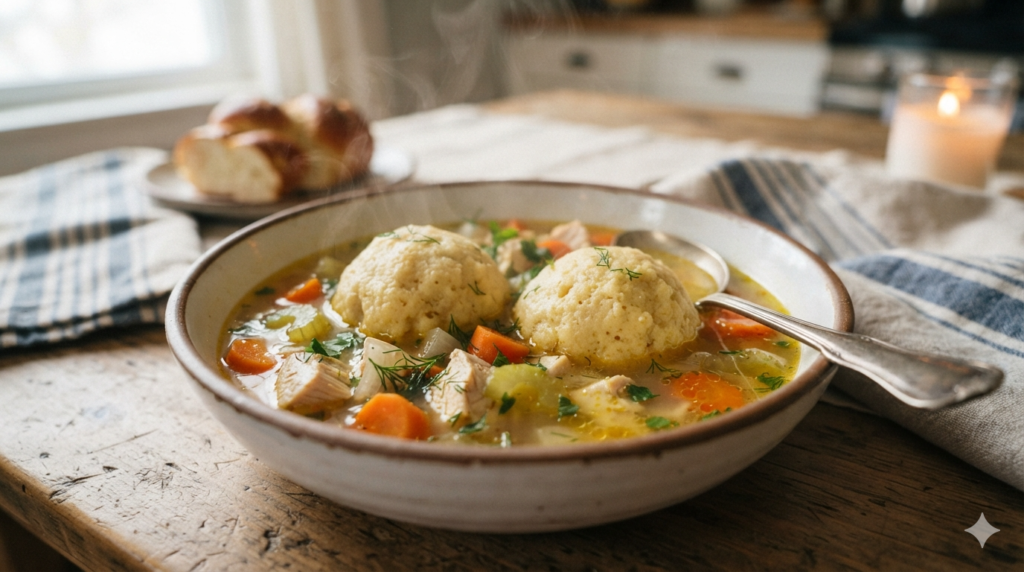

Few soups feel as warm and comforting as matzo ball soup. It combines rich chicken broth with soft, tender dumplings. The simple ingredients create a meal that feels special. This soup is closely linked with Jewish cooking and family traditions. Many families serve it during Passover and other special meals. However, you do not need a holiday to enjoy it. A bowl can be perfect on a cold evening or quiet weekend. The beauty of this dish comes from its simple balance. The broth brings savory flavor, while the matzo balls add a soft bite. Fresh herbs can make the soup even brighter. You can also add chicken, carrots, celery, and onions. This guide explains the dish in simple terms. You will learn how it works, how to make it, and how to avoid common mistakes.
What Is Matzo Ball Soup?
Matzo ball soup is a traditional soup made with chicken broth and matzo meal dumplings. The dumplings are often called matzo balls. They are made from matzo meal, eggs, and fat. Some recipes use chicken fat for deeper flavor. Others use oil for a lighter option. The mixture is chilled before the dumplings are shaped. They are then cooked gently in simmering liquid. Good matzo balls should feel tender when you bite them. Some people prefer fluffy dumplings that float easily. Others enjoy firmer, denser matzo balls. Both styles can be delicious. The broth is equally important to the final dish. A slow-cooked chicken broth can give the soup deep flavor. Carrots, celery, onion, garlic, and herbs can add more taste. The result is a simple dish with a rich cooking history.
A Simple Matzo Ball Soup Profile
| Feature | Details |
| Dish Name | Matzo Ball Soup |
| Main Ingredient | Matzo meal |
| Broth | Chicken broth or vegetable broth |
| Common Protein | Chicken |
| Main Vegetables | Carrots, celery, and onion |
| Texture | Soft, tender, and comforting |
| Cuisine | Jewish cuisine |
| Common Occasion | Passover and family meals |
| Cooking Style | Simmering |
| Difficulty | Easy to moderate |
| Best Served | Hot |
| Flavor | Savory, mild, and herby |
This profile gives you a quick look at the dish. Matzo ball soup is easy to customize while keeping its classic character. The soup can be made with homemade broth or good-quality store-bought stock. Chicken adds extra richness and makes the meal more filling. Vegetables provide color and gentle sweetness. Fresh dill or parsley can add a clean herbal taste. The matzo balls remain the main feature, though. Their texture depends on the recipe and cooking method. You can make them light and airy or slightly firm. This flexibility makes the soup useful for different preferences. It can work as a starter, lunch, or light dinner. It also stores well when handled correctly. For many cooks, the best part is its comforting simplicity.
What Ingredients Do You Need?
A basic matzo ball soup recipe does not require many ingredients. You need matzo meal for the dumplings. Eggs help bind the mixture together. You also need a cooking fat, such as oil or chicken fat. Some cooks add a little broth to the mixture. Salt and pepper provide basic seasoning. For the soup, chicken broth creates the main flavor. Carrots add sweetness and color. Celery brings a fresh, earthy note. Onion gives the broth more depth. Cooked chicken can make the soup more substantial. Fresh dill and parsley work well as finishing herbs. You can also add garlic for extra flavor. Choose ingredients that taste fresh and clean. Good broth can make a noticeable difference. If your broth tastes weak, season it before adding the dumplings. This simple step can make the finished soup much better.
How to Make Matzo Balls
Making matzo ball soup starts with preparing the dumpling mixture. Begin by mixing matzo meal with eggs and your chosen fat. Add seasoning and a small amount of liquid if needed. Stir gently until the ingredients come together. Avoid overmixing the batter. Cover the mixture and place it in the refrigerator. Chilling helps the mixture become easier to shape. It also helps the dumplings hold their form while cooking. After chilling, wet your hands with water. Scoop small portions of the mixture. Roll each portion gently between your palms. Do not press the balls too tightly. Loose shaping can help create softer dumplings. Drop them carefully into gently simmering broth. Cover the pot and cook until the centers become tender. Avoid lifting the lid too often. Steam and heat help the dumplings cook properly. When finished, serve them in hot broth with vegetables and herbs.
How to Get Light and Fluffy Matzo Balls
Many home cooks want light and fluffy matzo balls. The secret starts with the mixture. Avoid packing the matzo meal too tightly into your measuring cup. Extra meal can create heavy dumplings. Chilling the mixture is also important. It gives the ingredients time to absorb moisture. When shaping the balls, use gentle hands. Do not squeeze them into hard, compact shapes. The cooking liquid should stay at a gentle simmer. A violent boil can break apart delicate dumplings. Keep the pot covered while they cook. This helps maintain steady heat and moisture. Cooking time can vary based on dumpling size. Larger matzo balls need more time to become tender. You can test one dumpling before serving the whole batch. Cut it open and check the center. It should look cooked and feel soft. These small details can make a big difference.
Why Does the Broth Matter So Much?
The broth forms the foundation of matzo ball soup. Even perfect dumplings cannot save a bland broth. Homemade chicken broth often gives the deepest flavor. You can simmer chicken with onion, carrots, celery, and herbs. This slow cooking allows the flavors to blend. However, store-bought broth can also work well. Choose a good-quality broth with a flavor you enjoy. Taste it before using it in the soup. Add salt only after checking its seasoning. Some packaged broths already contain plenty of salt. You can improve simple broth with fresh herbs. A little black pepper can also add warmth. Chicken pieces can provide additional flavor and texture. Clear broth is often preferred for this style of soup. Skimming excess foam or fat can keep it cleaner. A flavorful broth makes every spoonful more satisfying.
Should You Use Chicken Fat or Oil?
The choice between chicken fat and oil depends on your preference. Traditional versions often use rendered chicken fat. It can give the dumplings a rich and savory flavor. Chicken fat is sometimes called schmaltz. It is especially useful when you want a classic taste. Vegetable oil can create a lighter result. It is also convenient when chicken fat is unavailable. Both options can produce good matzo balls. The texture may change slightly depending on the fat. Chicken fat can make the dumplings feel richer. Oil can keep the flavor more neutral. There is no need to overcomplicate the choice. Use what fits your ingredients and dietary needs. The most important part is using the correct amount. Too much fat can make the mixture greasy. Too little may create dry or firm dumplings. Balance is the key to a satisfying result.
What Vegetables Work Best?
Classic matzo ball soup often includes carrots and celery. These vegetables add flavor without overpowering the broth. Onion is another important ingredient for a flavorful soup base. Carrots provide natural sweetness and a bright color. Celery adds a fresh and slightly earthy flavor. You can cut the vegetables into thin slices or small pieces. Larger pieces create a more rustic appearance. Smaller pieces make the soup easier to eat. Some cooks also add parsnips for extra sweetness. Fresh dill is another popular addition. Parsley can provide a mild green freshness. Avoid adding too many strong vegetables. The goal is to keep the broth clean and balanced. The matzo balls should remain the star of the bowl. Cook the vegetables until they become tender but not mushy. This keeps the soup pleasant and textured.
Can You Make Matzo Ball Soup Ahead?
Yes, you can prepare parts of matzo ball soup ahead of time. In fact, advance preparation can make serving easier. The broth can be made one or two days before serving. Cooked chicken can also be stored separately. Matzo balls can be prepared ahead as well. Keeping them separate from the broth can protect their texture. They may continue absorbing liquid if left in the soup. Store the broth, vegetables, and dumplings in separate containers when possible. Refrigerate everything promptly after cooking. When serving, warm the broth gently on the stove. Add the matzo balls near the end of reheating. Heat them until they are warm throughout. Fresh herbs should be added just before serving. This method can make holiday meals much easier. It also lets you divide the work across different days.
Common Mistakes to Avoid
Several small mistakes can affect your matzo ball soup. One common problem is making the dumplings too large. Large balls need longer cooking times. They can also become unevenly cooked in the center. Another mistake is overmixing the batter. This may contribute to a heavier texture. Skipping the chilling step can also make shaping difficult. A hard boil can damage delicate matzo balls. Keep the cooking liquid at a gentle simmer instead. Another issue is underseasoned broth. Always taste the broth before serving. You can adjust salt, pepper, or herbs as needed. Avoid adding too many ingredients at once. Too many strong flavors can hide the classic taste. Finally, do not rush the cooking process. Gentle heat gives the dumplings time to become tender. Simple techniques often produce the best results.
How to Serve Matzo Ball Soup
A warm bowl of matzo ball soup is best served immediately. Ladle the broth into a deep bowl first. Add one or two matzo balls depending on their size. Include carrots, celery, and chicken if using them. Sprinkle fresh dill or parsley over the top. The herbs add color and a fresh aroma. Serve the soup while the broth is hot. A simple garnish is often enough. You do not need heavy toppings. The dish already has plenty of comforting flavor. Some people enjoy extra black pepper at the table. You can also serve the soup as a first course. Smaller portions work well before a larger meal. Larger bowls can turn it into a light main dish. The best serving style depends on the occasion. Keep the presentation simple and warm.
Matzo Ball Soup for Passover
Matzo ball soup is strongly connected with Passover meals. During Passover, many Jewish families avoid foods that contain leavened grains. Matzo is an important part of the holiday food tradition. Matzo meal is made from ground matzo. It provides the base for the soup dumplings. Recipes can vary between families and communities. Some families prefer very light matzo balls. Others make them more dense and hearty. Chicken broth is commonly used in many versions. However, the exact ingredients depend on family traditions. People following specific dietary or religious rules should check their own guidelines. Ingredient labels can also matter for packaged products. This is especially important when buying prepared broth or matzo meal. The soup can be both a holiday tradition and a comforting everyday meal. Its familiar flavor often brings back memories of family gatherings.
Easy Ways to Change the Recipe
There are many ways to personalize matzo ball soup. You can add shredded chicken for more protein. Extra carrots can make the soup sweeter and brighter. Fresh dill can create a stronger herbal flavor. Parsley offers a milder alternative. You can also experiment with different broth choices. A vegetable broth can work for a meat-free version. Some cooks add mushrooms for an earthy note. However, keep changes simple if you want a classic result. The matzo balls should still remain the main attraction. You can adjust their size based on your preference. Smaller dumplings cook faster and fit well in starter portions. Larger dumplings create a heartier bowl. Seasoning can also be adjusted to match your taste. A little extra pepper can add warmth without changing the soup completely.
How to Store Leftovers Safely
Leftover matzo ball soup should be cooled and refrigerated promptly. Store it in a clean, covered container. For better texture, keep the dumplings separate from the broth. Matzo balls can absorb liquid as they sit. This may make them softer than you want. When reheating, warm the broth gently on the stove. Add the dumplings after the broth becomes hot. Heat everything until it reaches a comfortable serving temperature. Avoid repeatedly reheating the entire batch. Reheat only the amount you plan to eat. This helps protect both flavor and texture. If the soup develops an unusual smell or appearance, discard it. Proper food storage is important with any cooked meal. When handled carefully, leftovers can make a quick and satisfying lunch. Always use clean containers and utensils during storage.
Why People Love This Comforting Soup
There is something special about matzo ball soup beyond its ingredients. It is simple, warm, and deeply comforting. The broth feels soothing without being heavy. The dumplings provide a soft and satisfying texture. Fresh vegetables add color and gentle flavor. The soup also carries a strong sense of tradition. Many people associate it with family dinners and holiday gatherings. Recipes often pass from parents to children. Each family may have its own preferred texture and seasoning. That personal touch makes the dish feel unique. You can also make it your own over time. Maybe you prefer extra dill or smaller dumplings. Perhaps you like a rich homemade broth. These small choices become part of your cooking style. That is one reason this classic soup remains popular across generations.
Frequently Asked Questions
1. What is matzo ball soup made of?
Matzo ball soup usually contains chicken broth, matzo meal dumplings, carrots, celery, and onion. The dumplings commonly contain matzo meal, eggs, and fat. Chicken and fresh herbs are also common additions. Recipes vary between families and cooking traditions. Some versions use chicken fat for a richer flavor. Others use neutral oil instead. The broth can be homemade or store-bought. Good seasoning is important either way. The final soup should taste savory and balanced.
2. Why are my matzo balls hard?
Hard matzo balls can result from several causes. The mixture may contain too much matzo meal. Overmixing can also contribute to a dense texture. Packing the mixture tightly while shaping can make them firm. Another issue may be insufficient cooking time. Matzo balls need enough time to cook through. A gentle simmer works better than an aggressive boil. Chilling the mixture before shaping can also help. Try making smaller, loosely shaped dumplings next time.
3. Can I make matzo ball soup without chicken?
Yes, you can make a meat-free version. Use a flavorful vegetable broth instead of chicken broth. Add carrots, celery, onion, mushrooms, or other vegetables. You can also use fresh herbs for extra flavor. The matzo balls can remain the same if your ingredients fit your needs. Always check packaged ingredients when following specific dietary rules. A well-seasoned vegetable broth can create a delicious alternative. The result can still feel warm and satisfying.
4. Are matzo balls supposed to float?
Matzo balls often float as they cook, but floating alone does not prove they are done. Their center still needs enough time to cook. The best test is texture. A properly cooked matzo ball should feel tender throughout. Cut one open if you are unsure. The inside should not look dry or raw. Cooking time depends on the size of each dumpling. Keep the broth at a gentle simmer while they cook.
5. Can I freeze matzo balls?
Yes, cooked matzo balls can generally be frozen for later use. Let them cool before storing them in a suitable freezer container. Keeping them separate from the broth can help preserve their texture. When ready to serve, thaw them safely and warm them gently. Avoid overheating them for too long. Freezing can be useful when preparing meals ahead. Labeling the container with the date can also help with organization. Always use proper food-storage practices.
6. What makes matzo ball soup so comforting?
The combination of warm broth and soft dumplings creates a very comforting meal. Chicken, vegetables, and herbs add familiar savory flavors. The soup is also connected with family traditions and holiday gatherings. Its simple ingredients make it approachable for home cooks. You can adjust the dumplings and seasonings to match your taste. That flexibility makes the dish personal. For many people, the emotional connection is just as important as the flavor.