

It’s a small detail, but it can make a big difference in your writing. If you’ve ever wondered decore or decor, you’re not alone. This common spelling confusion shows up in everything from social media posts to business descriptions.
In this guide, we’ll break down the correct spelling, explain the meaning, and show you how to use the word confidently in everyday language.
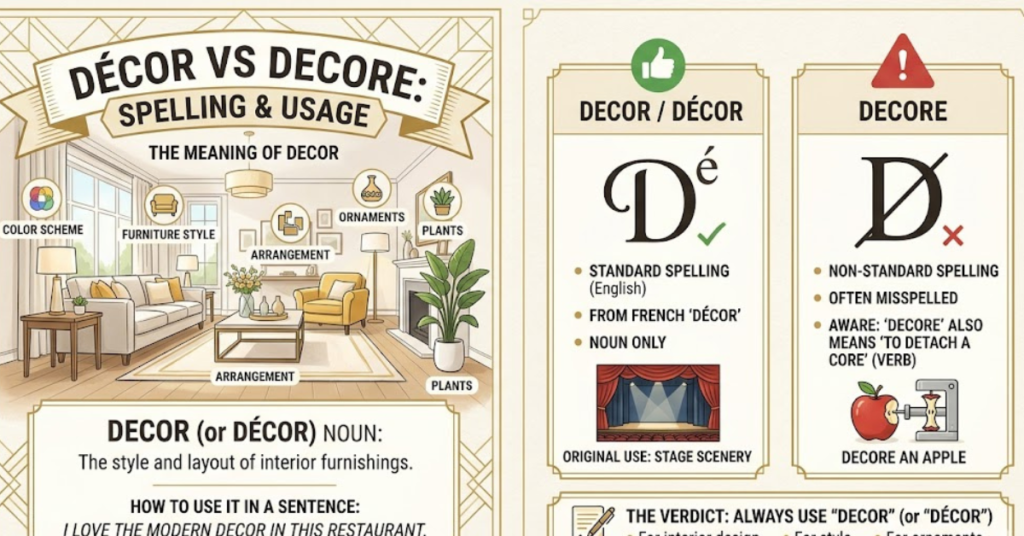
Decore or Decor: Which Is Correct?
Let’s clear it up right away:
- Decor is the correct spelling
- Decore is incorrect and not used in standard English
You may also see “décor” with an accent mark, which is the original French spelling and still widely accepted in English.
Quick Takeaway
- Decor = correct
- Décor = also correct (more formal or stylized)
- Decore = incorrect
Decore or Décor: What’s the Difference?
When comparing decore or décor, the real comparison should be between “decor” and “décor.”
Key Differences
- Decor: Simplified English version
- Décor: French-influenced spelling with an accent
Both versions mean the same thing, and choosing one usually depends on style or preference.
When to Use Each
- Use decor in everyday writing
- Use décor in formal, artistic, or design-focused contexts
Decor Meaning Explained
Understanding decore or decor meaning helps you use the word correctly in context.
Simple Definition
“Decor” refers to:
- The style or arrangement of a room
- Decorative elements like furniture, colors, and accessories
- The overall look and feel of a space
Example Sentences
- “The home decor reflects a modern style.”
- “They updated the office decor for a fresh look.”
The word is commonly used in interior design, events, and lifestyle topics.
Why Do People Write “Decore”?
The confusion between decore or decor spelling often comes from pronunciation and assumptions.
Common Reasons
- People assume the word ends with “-e”
- Influence from French spelling patterns
- Lack of familiarity with the correct form
Since “décor” includes an accent, some mistakenly simplify it incorrectly as “decore.”
How to Remember the Correct Spelling
Spelling “decor” correctly becomes easier with a simple trick.
Easy Memory Tips
- Think of “decor” = decoration (both start the same way)
- Remember it ends without “e”
- Associate it with “home decor,” a common phrase
Quick Rule
If you’re writing in English, stick with decor unless you intentionally want the stylized “décor.”
Common Usage of Decor in Everyday Language
“Decor” appears in many everyday situations, especially related to design and aesthetics.
Popular Contexts
- Home decor
- Wedding decor
- Office decor
- Event decoration
Example Phrases
- “Minimalist decor is trending right now.”
- “The restaurant’s decor feels cozy and modern.”
Using the correct spelling helps your writing look more polished and professional.
Common Mistakes to Avoid
Even simple words can be misused if you’re not careful.
1: Adding an Extra “e”
Incorrect:
- “I love your home decore.”
Correct:
- “I love your home decor.”
2: Misusing the Accent
While “décor” is correct, inconsistent use can look messy. Stick to one style.
3: Confusing Meaning
“Decor” relates to appearance and design, not actions or processes.
Why Correct Spelling Matters
Choosing between decore or decor may seem minor, but it impacts how your writing is perceived.
Key Benefits
- Improves clarity and professionalism
- Builds credibility in writing
- Avoids confusion in communication
Small details like spelling often make a big impression.
FAQs
Is it decore or decor?
The correct spelling is decor. “Decore” is incorrect.
What is the difference between decor and décor?
Both mean the same thing. “Décor” includes an accent and is more formal or stylized.
What does decor mean?
It refers to the style, design, and decorative elements of a space.
Can I use décor in everyday writing?
Yes, but “decor” is more common and simpler for general use.
Why do people spell it as decore?
It’s usually due to confusion with pronunciation or the French spelling.
Conclusion
So, when it comes to decore or decor, the answer is simple: decor is the correct spelling, while “décor” is an acceptable alternative with a stylistic touch.
Getting this right not only improves your writing but also helps you communicate more clearly, especially in topics related to design and lifestyle. Keep it simple, stay consistent, and your writing will always look more polished.
If you want to sharpen your language skills even further, pay attention to commonly confused words like this—they often make the biggest difference.