
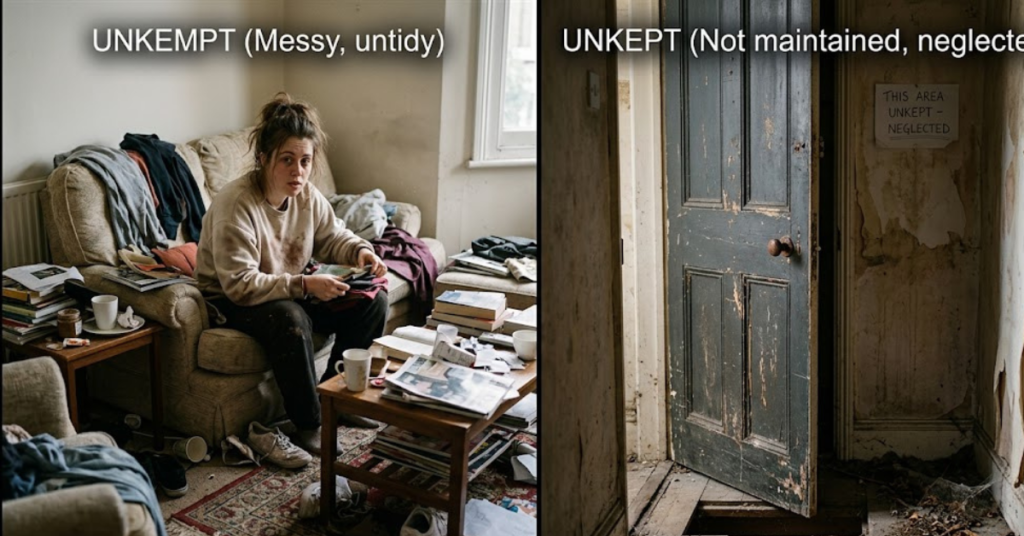

English has plenty of word pairs that look similar but don’t actually mean the same thing. One of the most confusing examples is unkempt vs unkept. Many people assume these words are interchangeable, especially when describing messy or untidy appearances, but only one is truly correct in modern standard usage.
In this guide on unkempt vs unkept, we’ll break down the meanings, definitions, grammar differences, and correct usage so you can confidently choose the right word in writing and speech. Once you understand the distinction, it becomes surprisingly easy to remember.
Unkempt vs Unkept: What’s the Difference?
At first glance, unkempt vs unkept looks like a simple spelling variation. However, the two words have different meanings and levels of correctness in standard English.
Unkempt
“Unkempt” is the correct and widely accepted word. It describes:
- A messy or untidy appearance
- Something not properly maintained
- Hair, clothing, or surroundings that look disordered
Unkept
“Unkept” technically exists but is rarely used in modern English in the same way. It usually means:
- Not kept or not maintained
- Something neglected or not followed through (like promises)
This is the core of the unkempt vs unkept difference.
Unkempt vs Unkept Definition Explained
Understanding the unkempt vs unkept definition helps remove confusion completely.
Definition of Unkempt
“Unkempt” is an adjective meaning:
Having a messy, disordered, or untidy appearance.
It is most often used to describe physical appearance or condition.
Examples:
- Unkempt hair
- Unkempt beard
- Unkempt room
Definition of Unkept
“Unkept” is also an adjective, but it means:
Not maintained, not kept, or not fulfilled.
It is more abstract and less commonly used in everyday writing.
Examples:
- Unkept promises
- Unkept rules
- Unkept standards
Unkempt vs Unkept Difference in Usage
The unkempt vs unkept difference mainly comes down to context and modern usage frequency.
When to Use Unkempt
Use “unkempt” when describing:
- Personal appearance
- Physical spaces
- Hair, clothing, or grooming
Examples:
- He had an unkempt appearance after the long trip.
- The garden looked unkempt after weeks without care.
When to Use Unkept
Use “unkept” when referring to:
- Promises
- Rules or agreements
- Responsibilities not fulfilled
Examples:
- She was frustrated by unkept promises.
- The agreement remained unkept for months.
Why “Unkempt” Is More Common
In modern English, “unkempt” is far more widely used than “unkept” in everyday conversation and writing.
Reasons include:
- It specifically describes appearance
- It appears more often in literature and media
- It has a stronger descriptive impact
Writers usually prefer “unkempt” when talking about physical messiness or disorder.
Common Examples of Unkempt in Sentences
Here are real-world examples of correct usage:
- His unkempt hair made him look like he had just woken up.
- The unkempt garden needed serious attention.
- She walked in with an unkempt appearance after the hike.
- The old house had an unkempt yard filled with weeds.
These examples show how natural the word feels in descriptive writing.
Common Examples of Unkept in Sentences
Although less common, “unkept” is still used in specific contexts:
- The politician faced criticism for unkept promises.
- The rules remained unkept despite repeated warnings.
- The contract terms were unkept by both parties.
Notice how “unkept” focuses more on abstract ideas rather than appearance.
Why People Confuse Unkempt and Unkept
The confusion between unkempt vs unkept usually happens for a few reasons:
1. Similar Spelling
Both words look almost identical, making them easy to mix up.
2. Similar Meaning Assumption
People assume both mean “messy,” even though only one primarily does.
3. Rare Usage of “Unkept”
Since “unkept” is less common, many people default incorrectly.
4. Sound Similarity
When spoken quickly, the difference is not very noticeable.
Simple Trick to Remember the Difference
Here’s an easy way to avoid confusion:
- Unkempt = appearance (hair, look, messiness)
- Unkept = promises or rules (things not maintained)
Think:
- “Kempt” = combed appearance → unkempt = not combed
- “Kept” = maintained → unkept = not kept
This mental link helps reinforce correct usage.
Common Mistakes in Writing
Incorrect Usage
- He had unkept hair.
- The garden looked unkept and wild.
Correct Usage
- He had unkempt hair.
- The garden looked unkempt and wild.
In most descriptive contexts, “unkempt” is the correct choice.
FAQs
What is unkempt vs unkept?
“Unkempt” refers to messy appearance, while “unkept” refers to something not maintained or fulfilled.
What is the unkempt vs unkept difference?
“Unkempt” is used for physical appearance, and “unkept” is used for abstract things like promises or rules.
Is it correct to say unkept hair?
No, the correct term is “unkempt hair.”
What does unkempt mean?
It means messy, untidy, or not properly maintained.
Is unkept a real word?
Yes, but it is less commonly used and usually refers to abstract concepts like promises.
Which is more common, unkempt or unkept?
“Unkempt” is far more common in modern English.
Conclusion
The confusion around unkempt vs unkept is understandable because the words look and sound similar. However, their meanings and usage are quite different. “Unkempt” is the correct choice when describing messy or untidy appearances, while “unkept” is reserved for abstract ideas like promises or rules.
Once you understand the unkempt vs unkept difference, it becomes easy to use both words correctly in the right context. Paying attention to these subtle distinctions can greatly improve your writing clarity and overall communication skills.