
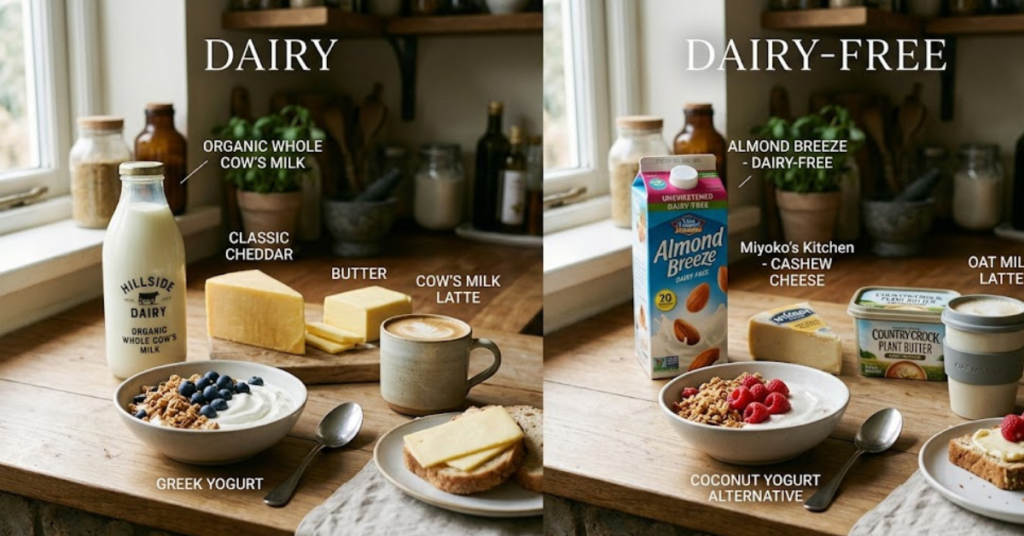

If you’ve ever stood in a grocery store comparing food labels, you’ve probably wondered about non dairy vs dairy-free. At first glance, the terms seem interchangeable. After all, both suggest a product doesn’t contain milk, right?
Not exactly.
The distinction between non dairy vs dairy-free is more important than many people realize, especially for individuals with milk allergies, lactose intolerance, or those following a vegan lifestyle. While the two labels may appear similar, they can mean very different things from a manufacturing and regulatory perspective.
In this guide, we’ll break down what each term means, how food labeling works, and how to make informed choices when shopping.
Why Understanding Non Dairy vs Dairy-Free Matters
Many consumers assume that “non dairy” automatically means a product contains no dairy ingredients whatsoever. However, food labeling regulations in some countries allow products labeled “non dairy” to contain small amounts of milk-derived ingredients.
For someone with a severe milk allergy, that distinction can be critical.
Understanding non dairy vs dairy-free helps you:
- Avoid unwanted dairy ingredients
- Shop safely for allergies
- Choose products that match your dietary goals
- Understand food labels more accurately
- Prevent accidental dairy consumption
What Does Dairy Mean?
Before comparing the terms, it’s important to understand what qualifies as dairy.
Dairy products are foods made from the milk of mammals, most commonly cows.
Examples include:
- Milk
- Cheese
- Butter
- Yogurt
- Cream
- Ice cream
- Cottage cheese
- Sour cream
These foods naturally contain milk proteins such as casein and whey, as well as lactose, the natural sugar found in milk.
What Does Non Dairy Mean?
The term non dairy generally indicates that a product is intended as an alternative to traditional dairy products.
However, this label does not always guarantee the complete absence of milk-derived ingredients.
How Non Dairy Products Can Contain Dairy
In some food regulations, products labeled “non dairy” may still contain:
- Casein
- Sodium caseinate
- Whey derivatives
- Other milk-based proteins
These ingredients are often used to improve texture, flavor, or stability.
For example, some coffee creamers marketed as non dairy may still contain milk-derived casein.
Examples of Non Dairy Products
Products commonly labeled non dairy include:
- Coffee creamers
- Frozen dessert alternatives
- Plant-based beverages
- Whipped toppings
- Cream substitutes
The exact ingredient list should always be checked before purchase.
What Does Dairy-Free Mean?
The term dairy-free generally indicates that a product contains no milk or milk-derived ingredients.
A dairy-free product should not contain:
- Milk
- Butter
- Cream
- Whey
- Casein
- Cheese
- Yogurt
For many consumers, dairy-free labeling provides greater confidence that a product does not contain dairy ingredients.
Who Typically Chooses Dairy-Free Products?
Dairy-free foods are often selected by:
- People with milk allergies
- Individuals with lactose intolerance
- Vegans
- Those following plant-based diets
- Consumers avoiding dairy for personal reasons
Non Dairy vs Dairy-Free: The Main Difference
The primary distinction between non dairy vs dairy-free is the possibility of milk-derived ingredients.
Non Dairy
May contain:
- Certain milk proteins
- Casein derivatives
- Trace dairy ingredients
Not always suitable for:
- Milk allergies
- Strict dairy avoidance
Dairy-Free
Should contain:
- No dairy ingredients
- No milk proteins
- No milk-derived additives
Typically suitable for:
- Dairy avoidance
- Plant-based lifestyles
- Most milk allergy concerns
This is why reading ingredient labels remains essential.
Why Food Labels Can Be Confusing
Food labeling isn’t always straightforward.
A product may appear plant-based while still containing milk-derived compounds.
For example:
- Non dairy creamers often contain sodium caseinate.
- Some plant-based desserts may be produced in facilities that handle milk.
- Certain processed foods contain hidden dairy ingredients.
Marketing language can sometimes create confusion if consumers rely solely on front-of-package claims.
Common Dairy Ingredients to Watch For
When evaluating non dairy vs dairy-free products, always check the ingredient list.
Look for terms such as:
- Milk
- Butterfat
- Whey
- Casein
- Sodium caseinate
- Calcium caseinate
- Lactose
- Milk solids
- Milk powder
- Cream
If any of these appear, the product contains dairy ingredients.
Is Non Dairy Safe for People With Milk Allergies?
Not necessarily.
A milk allergy involves an immune response to milk proteins. Since some non dairy products can still contain milk-derived proteins like casein, they may trigger allergic reactions.
Individuals with milk allergies should:
- Read ingredient labels carefully.
- Check allergen statements.
- Look specifically for dairy-free certification when available.
- Consult healthcare professionals if uncertain.
For allergy management, ingredient verification is far more reliable than relying solely on marketing claims.
Is Dairy-Free the Same as Lactose-Free?
No.
This is another common source of confusion.
Dairy-Free
Means:
- No dairy ingredients
Lactose-Free
Means:
- Dairy may still be present
- Lactose has been removed or reduced
For example, lactose-free milk is still dairy because it comes from cow’s milk.
Someone avoiding dairy entirely would need dairy-free products rather than simply lactose-free options.
Popular Dairy-Free Alternatives
The growth of plant-based eating has led to many dairy-free options.
Common alternatives include:
Plant-Based Milks
- Almond milk
- Oat milk
- Soy milk
- Coconut milk
- Rice milk
Dairy-Free Yogurts
- Coconut yogurt
- Almond yogurt
- Oat-based yogurt
- Soy yogurt
Dairy-Free Cheese Alternatives
- Cashew cheese
- Almond-based cheese
- Coconut oil-based cheese
- Soy cheese alternatives
These products are often designed to mimic traditional dairy products while avoiding milk ingredients.
How to Choose Between Non Dairy and Dairy-Free Products
The right choice depends on your goals.
Choose Non Dairy If:
- You’re looking for dairy alternatives.
- You don’t have a milk allergy.
- Trace dairy ingredients are not a concern.
Choose Dairy-Free If:
- You want to avoid all dairy ingredients.
- You have a milk allergy.
- You follow a vegan lifestyle.
- You prefer strictly plant-based products.
The ingredient list remains your most reliable guide.
Health Considerations
Neither dairy nor dairy-free products are automatically healthier.
Nutritional quality depends on factors such as:
- Protein content
- Added sugars
- Fortified nutrients
- Fat levels
- Processing methods
Some dairy-free alternatives are highly nutritious, while others may contain added sugars or stabilizers.
Always compare nutritional labels rather than assuming one option is inherently healthier.
Frequently Asked Questions
What is the difference between non dairy and dairy-free?
The main difference in non dairy vs dairy-free is that non dairy products may still contain certain milk-derived ingredients, while dairy-free products are intended to contain no dairy ingredients.
Can non dairy products contain milk?
Yes. Some non dairy products may contain milk proteins such as casein or caseinate.
Is dairy-free better for people with milk allergies?
Generally, yes. Dairy-free products are typically a safer choice because they should not contain milk-derived ingredients. However, ingredient labels should always be checked.
Is lactose-free the same as dairy-free?
No. Lactose-free products may still contain dairy ingredients. Dairy-free products do not contain dairy.
Are all vegan products dairy-free?
Generally, yes. Vegan products should not contain dairy ingredients because dairy comes from animals.
Why do some non dairy creamers contain milk?
Milk-derived ingredients like casein are sometimes added to improve texture, stability, and flavor while the product is still marketed as a dairy alternative.
Conclusion
Understanding non dairy vs dairy-free is essential for making informed dietary choices. While the terms may sound similar, they are not always interchangeable. A non dairy product may still contain certain milk-derived ingredients, whereas a dairy-free product is intended to contain no dairy components at all.
For individuals with milk allergies, strict dietary requirements, or a commitment to plant-based eating, this distinction can have a significant impact. The best approach is to go beyond marketing claims and carefully review ingredient lists and allergen statements. By understanding how these labels work, you’ll be better equipped to choose foods that align with your health needs and lifestyle preferences.