
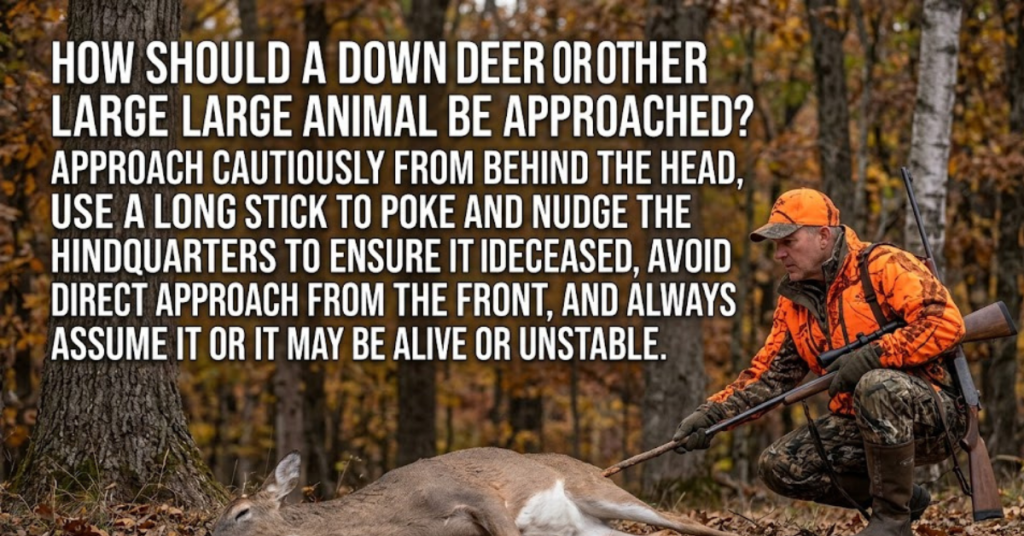

Imagine tracking a deer after a successful shot. Your heart is racing, and after following the trail, you finally spot the animal lying on the ground. While it may appear motionless, this is the moment when caution matters most. Understanding how should a downed deer or other large animal be approached is an essential hunting skill that protects both hunters and wildlife.
Many hunting accidents occur because people assume an animal is already dead when it is actually injured and capable of sudden movement. Approaching a downed animal correctly helps ensure your safety, allows for a humane outcome, and reflects responsible hunting practices.
In this guide, we’ll cover the safest approach techniques, common mistakes to avoid, and important hunting safety principles every hunter should know.
Why Proper Approach Matters
A wounded deer, elk, moose, or other large game animal can be unpredictable. Even severely injured animals may attempt to stand, kick, charge, or flee when approached.
Approaching carefully helps:
- Prevent injuries to hunters
- Confirm the animal has expired
- Reduce unnecessary suffering
- Support ethical hunting practices
- Protect equipment and hunting partners
The moments after locating an animal are just as important as the hunt itself.
The Correct Way to Approach a Downed Deer
The standard hunting safety recommendation is to approach the animal cautiously from behind and observe it carefully before making contact.
Step 1: Watch From a Distance
Before walking directly toward the animal:
- Stop several yards away.
- Observe for signs of breathing.
- Look for ear movement.
- Watch for blinking eyes.
- Check for leg or body movement.
Even minimal movement can indicate the animal is still alive.
Step 2: Approach From Behind
When determining how should a downed deer or other large animal be approached, the safest method is generally from behind the animal’s head and body.
Approaching from behind offers several advantages:
- Keeps you out of the animal’s direct field of vision.
- Reduces the chance of being kicked.
- Allows you to observe reactions safely.
- Provides a better escape route if the animal moves suddenly.
Never rush directly toward the head or front legs.
Step 3: Keep Your Distance Initially
As you move closer:
- Walk slowly.
- Stay alert.
- Be prepared to stop immediately.
- Avoid sudden movements or loud noises.
A wounded animal may react unexpectedly when it senses your presence.
How to Confirm the Animal Has Expired
Before touching the animal, hunters should verify that it is no longer alive.
Common Signs
Look for:
- No visible breathing
- Fixed, open eyes
- Lack of blinking
- Complete stillness
- No response to nearby movement
Use a Long Object
Many hunters use a long stick or branch to gently touch the animal from a safe distance.
Observe whether:
- The eyes blink
- The ears move
- The head reacts
- The body responds
Any reaction suggests the animal may still be alive.
Safety Tips for Large Game Animals
The same principles apply whether dealing with deer, elk, moose, wild hogs, or other large animals.
Important Safety Practices
- Keep your firearm pointed in a safe direction.
- Maintain awareness of your surroundings.
- Approach slowly and deliberately.
- Never assume the animal is dead.
- Communicate with hunting partners.
- Stay clear of legs and hooves.
Large animals can generate tremendous force even during their final moments.
Common Mistakes Hunters Should Avoid
Even experienced hunters occasionally make errors after locating game.
Rushing the Approach
Excitement can lead people to hurry toward the animal. This increases the risk of injury and poor decision-making.
Approaching From the Front
Walking directly toward the head places you in the animal’s line of sight and increases danger if it suddenly reacts.
Ignoring Signs of Life
Small movements, ear twitches, or breathing can be easy to miss. Always take time to observe carefully.
Handling Equipment Carelessly
Firearm safety remains important throughout the recovery process. Continue following all firearm safety rules even after the hunt appears finished.
Ethical Hunting Considerations
Responsible hunters prioritize humane treatment of wildlife. Properly approaching a downed animal is part of ethical game recovery.
Ethical hunters:
- Wait an appropriate amount of time after the shot.
- Track carefully.
- Confirm the animal’s condition.
- Take steps to minimize suffering.
- Follow local hunting regulations.
These practices demonstrate respect for wildlife and the hunting tradition.
What If the Animal Is Still Alive?
If you determine the animal is wounded but alive, follow local hunting laws and safety guidelines regarding humane dispatch.
Key considerations include:
- Maintaining a safe distance
- Ensuring a safe backdrop
- Following legal hunting regulations
- Acting quickly and humanely
Hunters should be familiar with the regulations in their jurisdiction before entering the field.
Special Considerations for Larger Animals
Animals such as elk, moose, and wild boar may present additional risks because of their size and strength.
Extra Precautions
- Approach even more cautiously.
- Keep hunting partners informed.
- Stay aware of escape routes.
- Watch for sudden movement.
- Avoid standing directly beside legs or antlers.
The larger the animal, the greater the potential risk if it reacts unexpectedly.
Quick Safety Checklist
Before touching a downed animal, ask yourself:
Have I observed it from a distance?
Did I approach from behind?
Have I checked for breathing?
Have I looked for eye movement?
Am I maintaining firearm safety?
Have I confirmed the animal is no longer responsive?
If any answer is “no,” take additional time before proceeding.
Frequently Asked Questions
How should a downed deer or other large animal be approached?
A downed deer should be approached slowly from behind while carefully observing for signs of life. Never assume the animal is dead until you have confirmed there is no movement or breathing.
Why should hunters approach from behind?
Approaching from behind reduces the chance of being seen and lowers the risk of injury from sudden movements, kicks, or attempts to stand.
How can you tell if a deer is still alive?
Look for breathing, blinking, ear movement, muscle twitching, or any response to nearby activity. These signs may indicate the animal is still alive.
What should you do if the animal moves?
Stop immediately, maintain a safe position, and reassess the situation. Follow local regulations and hunting safety procedures.
Can a wounded deer be dangerous?
Yes. Even severely injured deer can kick, run, or react unexpectedly, potentially causing injury.
Should you touch the animal immediately?
No. Observe from a distance first and verify that the animal has expired before making contact.
Conclusion
Knowing how should a downed deer or other large animal be approached is a critical part of safe and ethical hunting. The safest approach involves observing the animal from a distance, moving slowly from behind, watching carefully for signs of life, and confirming the animal has expired before touching it.
Patience during these final moments can prevent injuries and ensure a humane outcome. Whether you’re a new hunter or an experienced outdoorsman, following proper recovery procedures demonstrates responsibility, respect for wildlife, and a commitment to hunting safety.