
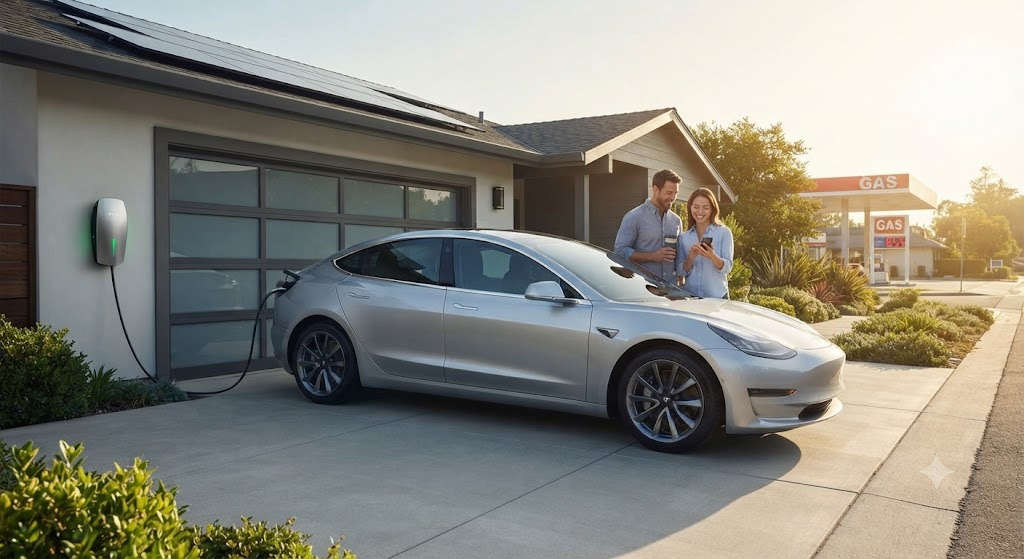

Driving a car that runs on battery power feels a bit like stepping into the future. You plug it in at night just like your phone, and in the morning, you are ready to roll past every gas station in town. But before you spend your hard-earned money, you might wonder: Are Electric Cars Worth It? The short answer is yes, but it really depends on how you drive and where you live. For most people, skipping the gas pump saves a lot of cash over the years. Plus, riding in total silence without the rumble of a noisy engine is super relaxing. Yet, buying a brand-new electric ride can still cost a bit more upfront than a regular gas car. You have to think about home chargers, battery health, and how far you travel on road trips. We will break down all the facts so you can see if ditching gas is the best move for your daily commute.
How Much Money Do You Save on Gas and Oil?
Think about how much cash you hand over at the gas pump every single week. When you switch to a plug-in vehicle, that weekly expense drops down to a tiny electric bill. Charging a car battery at home usually costs way less than buying gallons of regular gas. You also get to wave goodbye to oil changes, spark plug replacements, and loud exhaust repairs. Electric motors have very few moving parts compared to old-school gas engines, which means fewer things can break down and cost you money at the mechanic. Over five or ten years, these little savings add up to a huge pile of cash staying right in your pocket. It feels amazing to realize your biggest driving expense is just a fraction of what it used to be. The savings alone make people smile every time they pass a long line of cars waiting for expensive fuel.
What is the Real Cost to Buy and Own One?
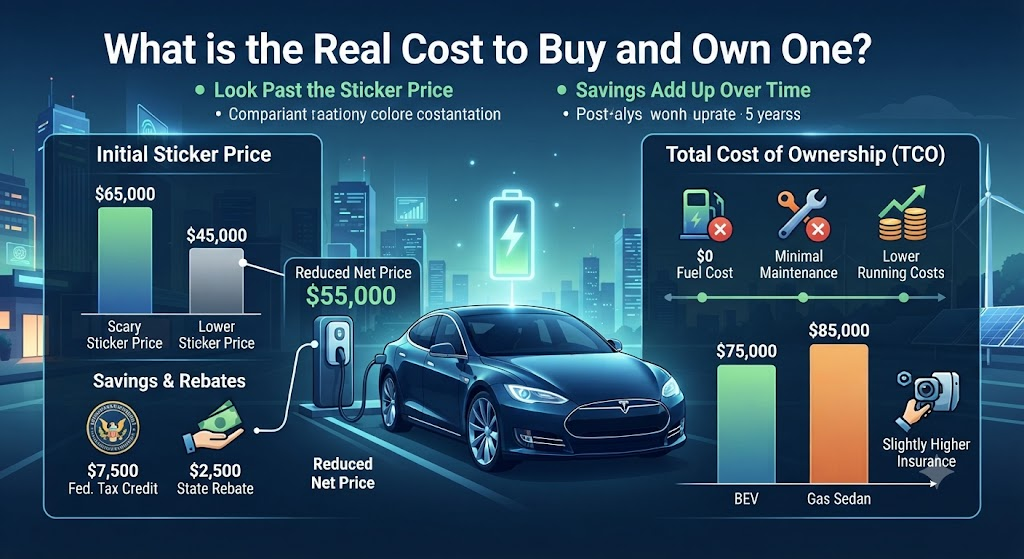
The sticker price on a brand-new battery car can still look a little scary at first glance. Car makers put expensive battery packs inside these rides, and that drives the initial cost up higher than a basic gas sedan. However, governments and local states often hand out nice tax credits and cash rebates to lower that price tag. You also have to look at the total cost over the whole time you own the vehicle. Since you spend almost nothing on regular maintenance and routine tune-ups, the car pays you back bit by bit every single month. Insurance can sometimes be a bit more expensive because the body parts and tech inside are high-tech and tricky to fix. If you plan to keep your vehicle for a long time, the math starts to look very friendly for your bank account.
How Easy is Charging at Home and on the Road?
Plugging in your car while you sleep is the ultimate convenience for everyday life. You just set up a Level 2 charger in your garage or driveway, and your ride wakes up completely full every single morning. No more freezing in the wind while holding a dirty gas nozzle on your way to work. Road trips take a tiny bit more planning than they used to with a gas tank. You need to use map apps to find fast public charging stations along the highway for longer journeys. Luckily, fast chargers can pump enough juice into your battery to get you another two hundred miles in the time it takes to grab a burger and use the restroom. The network of public plugs grows bigger and faster every single month, making travel simpler than ever.
How Far Can You Go on a Single Charge?
Range anxiety is the funny name people give to the fear of running out of power miles away from home. Early battery cars could only go a short distance before begging for a plug, which made drivers nervous. Today, most modern electric rides easily push past three hundred miles on a single full charge. That is way more than the average person drives in three or four days of regular commuting and errands. If you have a normal drive to your job and back, you might only need to plug in twice a week. Even in winter weather, when batteries lose a little bit of their pep, the distance is still plenty for daily life. Knowing you have plenty of miles in the tank brings real peace of mind on busy days.
Do Electric Cars Help the Planet and Clean the Air?
Driving around without a tailpipe shooting smoke into the sky feels pretty great for your local neighborhood. Electric vehicles produce zero tailpipe emissions, which keeps the air clean and fresh for everyone walking down the street. Even when you factor in the power plants that make the electricity, these rides still pump far less pollution into the air than gas cars. As more towns and cities build solar panels and wind farms, the power going into your car gets even cleaner. You are actively helping reduce smog in heavy traffic areas where kids play and people jog. It is a simple way to do your small part for the earth without changing how you live your life. Mother Nature definitely appreciates fewer gas fumes floating around the atmosphere.
What is it Like to Drive a Battery-Powered Car?
Pressing the gas pedal in an electric car delivers an instant rush of smooth, quiet power. There is no waiting for gears to shift or an engine to rev up before the car starts moving forward. The moment your foot touches the pedal, the electric motor pushes you down the road with total confidence and zero lag. Because the heavy battery sits right on the bottom of the car floor, the vehicle feels super stable around sharp corners. You get a low center of gravity that hugs the pavement and makes you feel like a race car driver on the highway. Plus, the quiet cabin lets you talk to your friends or listen to your favorite tunes without shouting over a roaring motor. Driving becomes fun again instead of feeling like a boring chore.
How Long Do Electric Car Batteries Last?
People worry that the big battery pack will die after a couple of years and leave them stranded. The amazing truth is that modern car batteries are built to last as long as the car itself. Most manufacturers put a massive eight-year or one-hundred-thousand-mile warranty on the battery pack to prove they trust it. Over many years, the battery might hold a tiny bit less charge than it did on day one, just like your old smartphone. However, that small drop is usually so minor you will barely notice it during your normal weekly routines. Engineers design smart cooling systems inside the car to keep the battery happy in hot summer heat and freezing winter snow. You do not have to stress about sudden battery failures while driving down the interstate.
How Do They Handle Winter Cold and Hot Summer Heat?
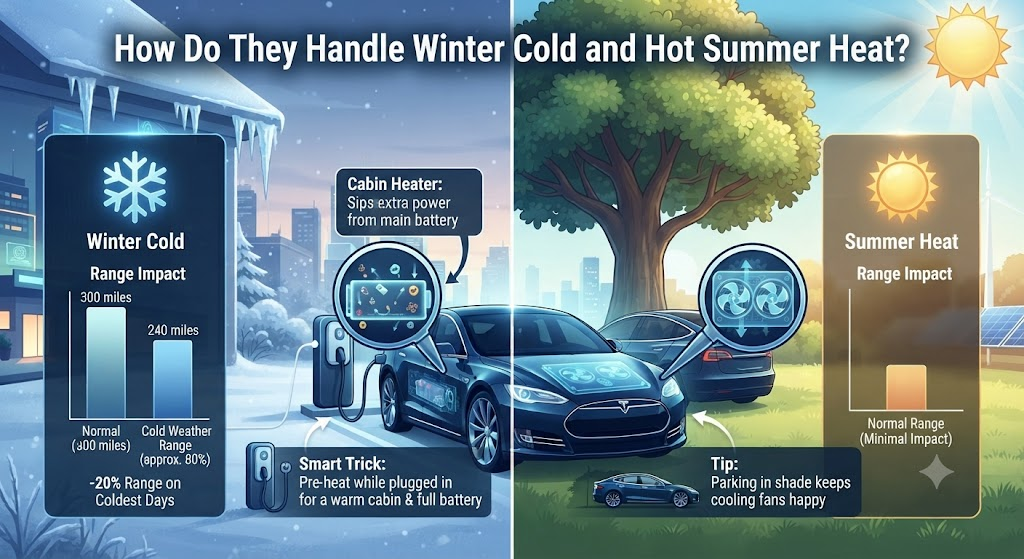
Extreme weather tests every single part of a car, and battery packs are no exception to the rule. When winter temperatures drop below freezing, chemical reactions inside the battery slow down a little bit. This means your driving range might shrink by twenty percent on the coldest days of the year. Turning on the cabin heater also sips some extra power straight from the main battery pack while you drive. The smart trick is to pre-heat your car while it is still plugged into your house charger in the morning. That way, the cabin is warm and cozy, and your battery stays nice and full for the trip. Summer heat is much easier to manage, though parking in the shade helps keep the cooling fans quiet and happy.
Are They Good for Road Trips and Long Drives?
Taking a long road trip in an electric car requires a fun little shift in your travel style. Instead of driving for five hours straight until your back hurts, you stop every two and a half hours for a quick stretch. These short breaks fit right into a healthy travel routine where you grab a coffee and walk around a bit. Fast chargers along major highways top your battery up while you take your break, so the car is ready before you finish your snack. Navigation screens in modern electric rides talk to the charging network in real-time to pick the best spots for you. You never have to guess where the next plug is hiding or worry about getting stuck in the middle of nowhere. It turns a standard boring highway drive into a neat little adventure.
A Quick Look at Pros and Cons
| Feature | The Good Stuff | Things to Watch Out For |
| Fuel Costs | Super cheap home charging | Higher upfront purchase price |
| Maintenance | No oil changes or tune-ups | Expensive repairs for high-tech parts |
| Drive Feel | Fast, smooth, and quiet | Range drops a bit in winter snow |
| Planet | Zero tailpipe pollution | Public chargers needed on long trips |
Frequently Asked Questions
Do I need a special charger at my house?
You do not strictly need one, but it helps a lot. A standard wall outlet works, but it charges very slowly. Installing a Level 2 home charger fills your battery overnight while you sleep.
Can I wash an electric car in a normal car wash?
Yes, absolutely. They go through regular automatic car washes just like any gas car. All the high-voltage parts and battery areas are sealed tightly against water and soap.
What happens if I run out of battery on the road?
The car gives you lots of loud warnings before it stops. If you do run out, a tow truck can take you to the nearest public charging station or your house safely.
Are electric cars faster than gas cars?
Most of the time, yes, from a dead stop. Electric motors send power to the wheels instantly without waiting for engine gears to shift, making them feel very snappy.
Do I still need to pay for car insurance?
Yes, you need standard auto insurance. Sometimes it costs a little bit more because electric cars have advanced sensors and high-tech body panels that cost more to replace.
How much does a replacement battery cost?
Most batteries last the whole life of the car and never need replacement. If one ever does need replacement down the road, prices continue to drop as new tech arrives.
Conclusion
Deciding if battery cars make sense for your driveway comes down to simple daily habits and simple math. If you can plug in at home and mostly drive around your local town or city, the savings are incredible. You get a quieter ride, clean air, and zero trips to the gas station ever again. Take a moment to look at your local electricity rates and check out available tax credits in your area today. Head to a local dealership this weekend to test drive one and feel that instant smooth power for yourself. Making the switch is easier than you think, and your wallet will thank you for years to come.