
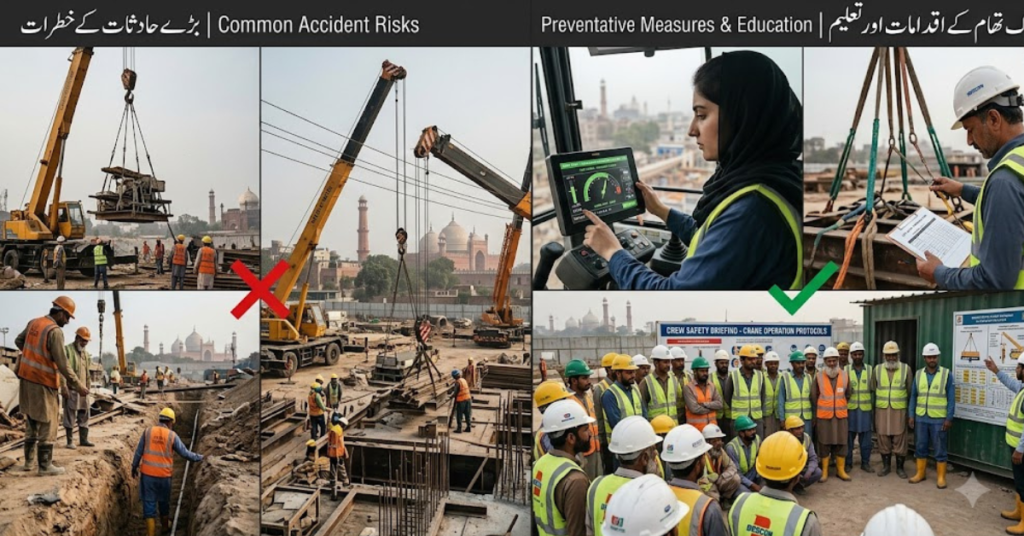

Cranes are among the most powerful and essential pieces of equipment used in construction, manufacturing, shipping, and industrial operations. They make it possible to lift and move heavy loads efficiently, but they also present significant safety risks when not operated correctly. This leads many workers, supervisors, and safety professionals to ask: how can the most common accidents which occur when using cranes be reduced?
The answer lies in a combination of proper training, routine inspections, effective communication, thorough planning, and strict adherence to safety procedures. Most crane accidents are preventable, and organizations that prioritize safety can significantly reduce the risk of injuries, fatalities, equipment damage, and costly project delays.
This guide explores the most common crane accidents, their causes, and the practical steps that can help create a safer work environment.
Understanding Crane-Related Accidents
Crane accidents can occur in a variety of ways, often resulting from human error, equipment failure, or unsafe work conditions.
Some of the most common incidents include:
- Load drops
- Crane tip-overs
- Contact with power lines
- Struck-by accidents
- Mechanical failures
- Improper rigging incidents
- Falls from elevated positions
Understanding these risks is the first step toward preventing them.
Why Crane Safety Is So Important
Crane operations involve lifting extremely heavy loads, often over workers, buildings, and equipment.
Even a small mistake can result in:
- Serious injuries
- Fatal accidents
- Property damage
- Production delays
- Legal and financial consequences
Because cranes operate in high-risk environments, safety procedures must be treated as a top priority.
Common Causes of Crane Accidents
Before discussing prevention, it’s important to understand what causes most crane-related incidents.
Operator Error
Many accidents occur because operators:
- Misjudge load weights
- Exceed crane capacity limits
- Operate without proper training
- Fail to follow established procedures
Human error remains one of the leading causes of crane accidents.
Equipment Failure
Mechanical problems can develop when equipment is not properly maintained.
Common issues include:
- Worn cables
- Faulty brakes
- Hydraulic failures
- Structural damage
Routine maintenance helps identify these problems before they become dangerous.
Improper Rigging
Loads that are incorrectly rigged may become unstable during lifting operations.
Improper rigging can lead to:
- Load shifting
- Load drops
- Equipment damage
- Worker injuries
Qualified riggers play a critical role in crane safety.
Environmental Conditions
Weather conditions can significantly affect crane operations.
Potential hazards include:
- Strong winds
- Heavy rain
- Lightning
- Poor visibility
Environmental factors should always be considered before lifting operations begin.
How Proper Training Reduces Crane Accidents
One of the most effective ways to improve safety is through comprehensive training.
Operator Certification
Crane operators should receive:
- Formal instruction
- Hands-on training
- Competency evaluations
- Ongoing refresher courses
Certified operators are more likely to recognize hazards and follow safe operating procedures.
Safety Awareness for Workers
Safety training should extend beyond operators.
Ground crews, signal persons, supervisors, and riggers should understand:
- Site hazards
- Communication protocols
- Emergency procedures
- Load-handling practices
A well-informed team contributes to a safer workplace.
The Importance of Pre-Operation Inspections
Routine inspections help identify potential issues before equipment is used.
Daily Inspection Checklist
Operators should inspect:
- Wire ropes
- Hooks
- Hydraulic systems
- Brakes
- Controls
- Safety devices
Any defects should be reported and repaired immediately.
Scheduled Maintenance Programs
Preventive maintenance reduces the likelihood of unexpected equipment failures and extends the life of crane components.
Safe Load Management Practices
Overloading is a major contributor to crane accidents.
Know the Load Weight
Before lifting, operators should verify:
- Exact load weight
- Load dimensions
- Center of gravity
Assumptions can lead to dangerous lifting situations.
Follow Load Capacity Limits
Every crane has specific load limits based on:
- Boom length
- Lift radius
- Configuration
Exceeding these limits increases the risk of tipping and structural failure.
Effective Communication on Crane Sites
Poor communication often contributes to accidents.
Use Qualified Signal Persons
Signal persons help guide crane operators when visibility is limited.
Clear communication reduces misunderstandings and improves coordination.
Establish Standard Signals
Teams should use standardized:
- Hand signals
- Radio communication procedures
- Emergency stop signals
Consistency helps prevent confusion during lifting operations.
Preventing Contact with Power Lines
One of the most serious crane hazards involves electrical contact.
Maintain Safe Distances
Operators should always maintain minimum clearance distances from overhead power lines.
Conduct Site Assessments
Before work begins, inspect the area for:
- Electrical hazards
- Utility lines
- Obstructions
Proper planning can prevent potentially fatal incidents.
Creating a Strong Safety Culture
Safety procedures are most effective when supported by a strong organizational culture.
Encourage Hazard Reporting
Workers should feel comfortable reporting:
- Unsafe conditions
- Equipment concerns
- Near misses
- Potential risks
Early reporting often prevents future accidents.
Conduct Regular Safety Meetings
Safety briefings help reinforce best practices and keep workers informed about site-specific hazards.
Best Practices for Crane Accident Prevention
Organizations can reduce risks by following these key practices:
- Train and certify crane operators.
- Conduct daily equipment inspections.
- Follow manufacturer guidelines.
- Verify load weights before lifting.
- Use qualified riggers and signal persons.
- Maintain safe distances from power lines.
- Monitor weather conditions.
- Establish clear communication procedures.
- Perform regular maintenance.
- Promote a culture of safety and accountability.
These measures significantly reduce accident potential.
The Role of Technology in Crane Safety
Modern technology has improved crane safety considerably.
Examples include:
- Load moment indicators
- Anti-collision systems
- Camera monitoring systems
- Remote controls
- Real-time diagnostics
These tools help operators make safer decisions and detect hazards more quickly.
Frequently Asked Questions
How can the most common accidents which occur when using cranes be reduced?
The most effective methods include proper operator training, routine inspections, safe load management, effective communication, preventive maintenance, and strict adherence to safety procedures.
What is the most common cause of crane accidents?
Operator error, improper rigging, equipment failure, and contact with power lines are among the most common causes.
Why are crane inspections important?
Inspections help identify damaged components, mechanical issues, and safety concerns before operations begin.
How does weather affect crane safety?
High winds, rain, lightning, and poor visibility can make crane operations more dangerous and increase accident risks.
What role do signal persons play in crane operations?
Signal persons provide communication and guidance to operators, especially when visibility is restricted.
Can crane accidents be completely prevented?
While no operation is entirely risk-free, most crane accidents can be significantly reduced through proper planning, training, maintenance, and safety management.
Conclusion
Understanding how can the most common accidents which occur when using cranes be reduced? is essential for creating safer workplaces and protecting workers from serious harm. The majority of crane accidents stem from preventable factors such as inadequate training, poor communication, equipment failures, improper rigging, and unsafe operating practices.
Organizations that invest in comprehensive training programs, regular inspections, preventive maintenance, and strong safety cultures are far more likely to prevent incidents before they occur. By prioritizing safety at every stage of crane operations, companies can reduce risks, improve efficiency, and ensure that workers return home safely at the end of every shift.