
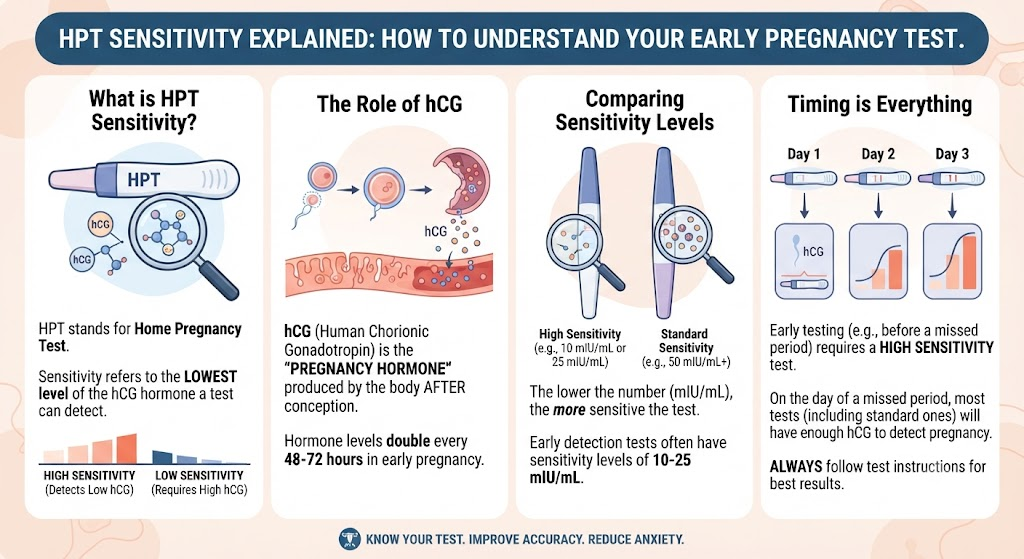

When you are trying to conceive, waiting for that test result feels like forever. You might have seen the term HPT Sensitivity on the side of a pregnancy test box. It sounds like technical jargon, but it is actually very simple. HPT stands for Home Pregnancy Test. The sensitivity level tells you the lowest amount of hCG hormone a test can detect. The hCG hormone is the “pregnancy hormone” your body makes after conception. Some tests are very sensitive and can find tiny amounts of this hormone. Others need a much higher level to show a positive result. Knowing this helps you pick the right test for your needs.
Why HPT Sensitivity Matters
Not all tests work the same way. A test with high hpt sensitivity can often detect a pregnancy earlier than one with lower sensitivity. These high-sensitivity tests are designed to pick up lower concentrations of hCG in your urine. If you test very early, a test with low sensitivity might give you a false negative result. This happens even if you are pregnant, simply because the test isn’t “smart” enough to catch the small amount of hormone present. By choosing a test that fits your timeline, you can get a more accurate answer. Always check the packaging to see how sensitive your specific brand is.
Understanding hCG Levels
To understand hpt sensitivity, you have to know a little about hCG. Your body starts producing this hormone shortly after a fertilized egg attaches to the uterine lining. At first, the levels are extremely low. Every two to three days, these levels usually double in early pregnancy. A test with higher hpt sensitivity can pick up this hormone earlier in the process. If you wait until the day of your missed period, your hCG levels will be much higher. This makes it easier for almost any home test to give you a reliable reading. Testing too early is the most common cause of confusion.
How to Choose the Right Test
Choosing between different pregnancy tests can feel overwhelming. You will see numbers like 10 mIU/mL or 25 mIU/mL on some boxes. These numbers represent the hpt sensitivity of the test. A lower number means the test is more sensitive. If you want to test before your period is due, look for a lower number. However, even the most sensitive tests are not perfect. Some women naturally produce the pregnancy hormone faster than others. A test that works for a friend might not be the right choice for your specific body. Keep this in mind when you are shopping.
The Role of First Morning Urine
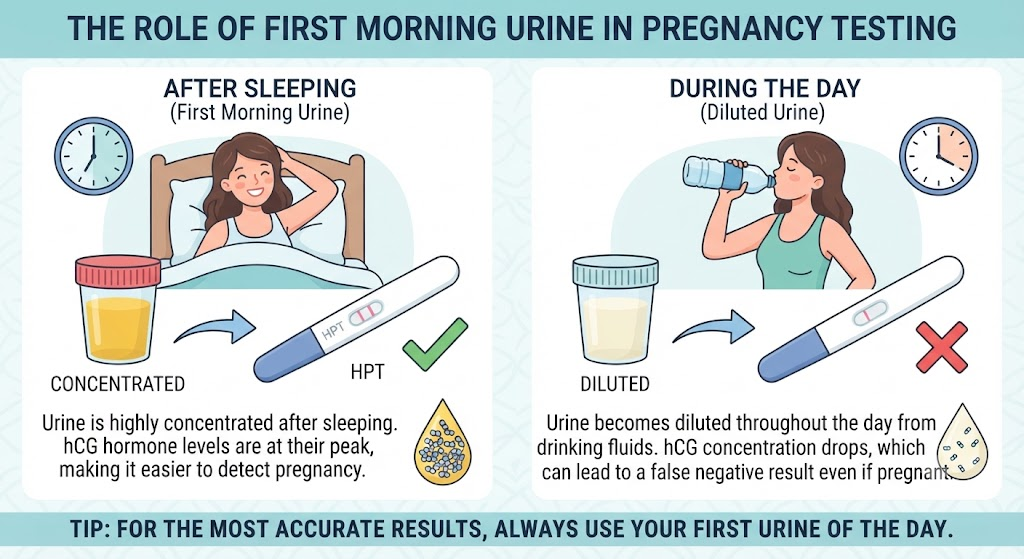
Even with excellent hpt sensitivity, the time of day you test makes a big difference. Many experts suggest using your first morning urine for the most accurate results. This is because your urine is most concentrated after you have been sleeping for several hours. During the day, you drink water and fluids, which dilutes your urine. If your urine is diluted, the concentration of the hCG hormone drops. This can trick a test with great hpt sensitivity into showing a negative result. Using your first urine of the day gives the test the best possible chance to work correctly.
Avoiding False Negatives
A false negative happens when you are pregnant, but the test says you are not. This is often linked to hpt sensitivity and timing. If you test too soon, there simply isn’t enough hCG for the test to detect. Do not feel discouraged if you get a negative result early on. It does not always mean you aren’t pregnant. It might just mean your body hasn’t reached the threshold for your specific test. If your period still hasn’t arrived, wait a few days and try again. Patience is key when dealing with these early, delicate stages of testing.
Reading Your Results Properly
Reading the result window can be tricky, especially if the line is very faint. Many people worry that a faint line means their hpt sensitivity test is broken. In most cases, a line is a line, no matter how light it looks. A faint line often means your hCG levels are still quite low. This is very common when testing early in the morning. If you see a second line, even a faint one, it is usually a positive result. Follow the instructions on the box carefully. Do not look at the result after the time limit has passed, as evaporation lines can form.
Can HPT Sensitivity Be Too High?
You might wonder if you should always use the most sensitive test possible. While high hpt sensitivity is great for early detection, it can sometimes lead to stress. Very sensitive tests can sometimes pick up chemical pregnancies. These are pregnancies that end very early, often before you would have even known you were pregnant. Without a super sensitive test, you might never have known about it. For some, this information is helpful. For others, it causes unnecessary heartbreak. It is a personal choice to decide how early you really want to know. Use your best judgment for your own peace of mind.
Comparing Store Brands and Name Brands
Many people ask if expensive tests have better hpt sensitivity than cheaper store brands. Surprisingly, many store-brand tests are just as accurate as the famous name brands. The technology used to detect hCG is fairly standard across the industry. You are often paying for the fancy plastic casing or the digital display rather than better science. Read the back of the box to find the actual sensitivity rating. You can often save a lot of money by comparing these numbers rather than the price tag. Reliability is usually consistent if the sensitivity levels are the same.
What to Do After a Positive Result
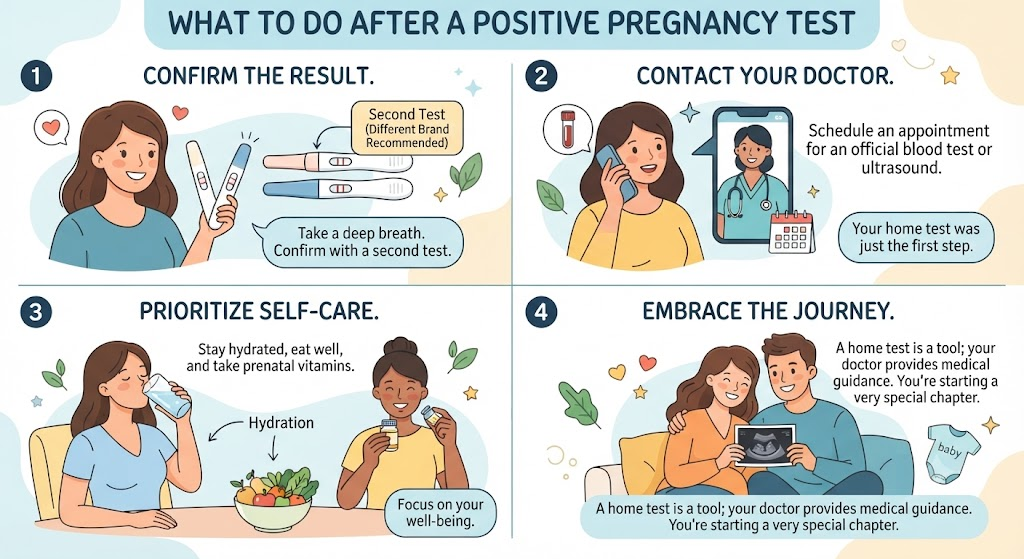
If you get a positive result, take a deep breath. First, confirm the result with a second test, perhaps from a different brand. Once you have a clear positive, contact your healthcare provider. They will want to schedule a blood test or an appointment to confirm the pregnancy. Your hpt sensitivity test was just the first step in your journey. Stay hydrated, eat well, and try to relax. Remember that a home test is a tool, but your doctor provides the medical guidance you need. You are starting a very special and important chapter of your life.
| Feature | Low Sensitivity Test | High Sensitivity Test |
| hCG Threshold | Higher (e.g., 25+ mIU/mL) | Lower (e.g., 10 mIU/mL) |
| Best Time to Use | On or after missed period | A few days before period |
| Result Speed | Often standard | Can be faster |
| Early Detection | Less likely to detect | More likely to detect |
| Cost | Usually lower | Often higher |
| Common Use | Routine testing | Early testing |
Frequently Asked Questions
1. Does hpt sensitivity change if I drink too much water?
Yes, drinking too much water dilutes your urine. This makes it harder for the test to find the hCG hormone, which can lead to a false negative.
2. Can I trust a faint line on a high sensitivity test?
Yes, in most cases, a faint line is a positive result. It often just means your hormone levels are still rising.
3. Why do some tests cost more than others?
Higher costs are usually for brand names, digital screens, or easier-to-hold designs, not necessarily for better hpt sensitivity technology.
4. When is the earliest I should test?
Most experts suggest waiting until the day of your expected period to get the most accurate result from your hpt sensitivity test.
5. What is an evaporation line?
This is a faint, colorless line that appears after the recommended testing time has passed. It is not a positive result.
6. Are digital tests better than line tests?
Digital tests are easier to read, but they often require higher hCG levels than some line tests, meaning they might not have the same hpt sensitivity.
Conclusion
Understanding hpt sensitivity empowers you to take control of your testing journey. Whether you are eager to know as soon as possible or prefer to wait until your period is late, knowing your test’s threshold helps you avoid confusion. Remember to use first-morning urine, follow the instructions closely, and keep an eye on your timing. While technology is wonderful, it is just a starting point. If you have any doubts or questions, always reach out to a professional. Have you had experience with early testing, or are you currently waiting for the right moment? Share your thoughts below, and let’s keep the conversation going!