
Have you ever typed immaculate or emaculate and paused, unsure which one is right? You’re not alone. This is a common spelling confusion, especially because both words sound similar when spoken quickly.
In this guide, we’ll break down the correct spelling, explore the meaning, and show you how to use the word properly in everyday writing. By the end, you’ll never second-guess it again.
Immaculate or Emaculate: Which Is Correct?
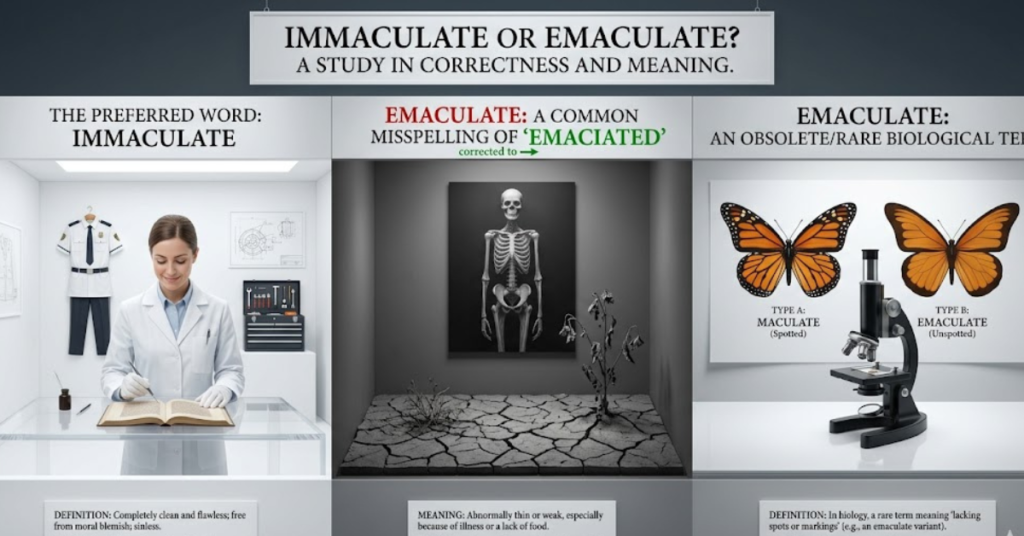
Let’s clear things up immediately: “immaculate” is the correct spelling, while “emaculate” is a misspelling.
Why “Immaculate” Is Correct
- It is a standard English word with a clear definition
- It comes from Latin roots meaning “without stain”
- It is recognized in all dictionaries and formal writing
So, if you’re asking is it immaculate or emaculate, the answer is simple: always use “immaculate.”
Immaculate or Emaculate Meaning
Understanding the meaning makes the correct spelling easier to remember.
What Does “Immaculate” Mean?
“Immaculate” is an adjective used to describe something that is:
- Perfectly clean
- Free from flaws or mistakes
- Neat, tidy, or well-organized
Examples in Sentences
- “Her house was absolutely immaculate.”
- “He gave an immaculate performance.”
- “The report was written with immaculate detail.”
In each case, the word emphasizes perfection or cleanliness.
Why “Emaculate” Is Incorrect
The confusion around immaculate or emaculate meaning often comes from pronunciation. When spoken quickly, the “im” sound can sometimes be misheard as “em.”
Common Reasons for the Mistake
- Phonetic spelling habits
- Typing too fast
- Lack of familiarity with the word
However, “emaculate” is not a valid English word and should always be avoided.
Easy Ways to Remember the Correct Spelling
If you’re unsure is it immaculate or emaculate?, these simple tricks can help:
Memory Tips
- Think of “immaculate” starting with “im-”, like “impossible” or “important”
- Remember it has double “m” in the beginning
- Associate it with “image of perfection” to reinforce the “im” sound
The more you connect the word with its meaning, the easier it becomes to spell correctly.
Synonyms and Similar Words
To improve your vocabulary, it helps to know alternatives to “immaculate.”
Common Synonyms
- Spotless
- Flawless
- Perfect
- Pristine
- Neat
Example Variations
- “The room was immaculate” → “The room was spotless”
- “She looked immaculate” → “She looked flawless”
Using synonyms can make your writing more engaging and less repetitive.
When to Use “Immaculate” in Writing
Knowing how to use the word correctly helps you sound more natural and confident.
Common Uses
- Describing cleanliness
- “The kitchen was immaculate.”
- Praising performance
- “He delivered an immaculate speech.”
- Highlighting perfection
- “The design is immaculate.”
Common Mistakes to Avoid
Even simple words can lead to errors if you’re not careful.
1. Misspelling the Word
Incorrect:
- “Her work was emaculate.”
Correct:
- “Her work was immaculate.”
2. Dropping a Letter
Sometimes people write “imaculate” with one “m,” which is also incorrect.
3. Overusing the Word
While “immaculate” is powerful, using it too often can make your writing feel repetitive. Mix in synonyms where appropriate.
Why Correct Spelling Matters
Getting words like this right improves both clarity and credibility.
Key Benefits
- Makes your writing more professional
- Builds trust with readers
- Reduces confusion
Even small spelling mistakes can distract readers, especially in formal or academic contexts.
FAQs
Is it immaculate or emaculate?
The correct spelling is “immaculate.” “Emaculate” is incorrect.
What does “immaculate” mean?
It means perfectly clean, flawless, or without any mistakes.
Why do people write “emaculate”?
It usually happens بسبب pronunciation confusion or typing errors.
Can “immaculate” be used in formal writing?
Yes, it is suitable for both formal and informal contexts.
Is “imaculate” correct?
No, it’s also incorrect. The correct form includes two “m” letters: “immaculate.”
Conclusion
When it comes to immaculate or emaculate, the answer is clear: “immaculate” is the only correct spelling. While the mistake is common, it’s easy to fix once you understand the word’s origin and meaning.
Remember the double “m,” connect it with the idea of perfection, and you’ll get it right every time. With consistent practice, this confusion will quickly become a thing of the past.
If you’re working on improving your writing, mastering small details like this can make a big difference in how polished and professional your language feels.