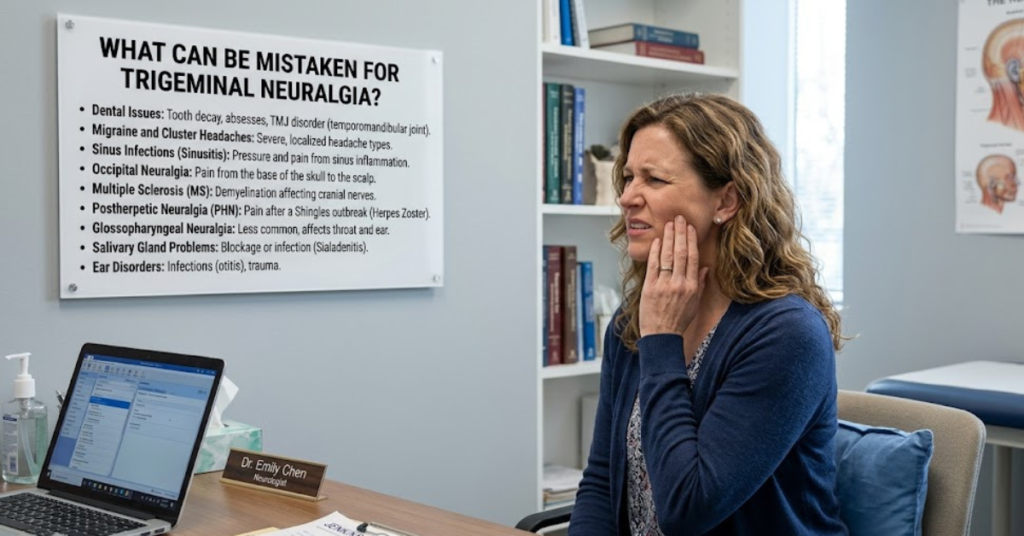

Imagine experiencing sudden, electric shock-like pain in your face that appears without warning. For many people, the first thought is a dental problem, sinus infection, or headache disorder. However, these symptoms may point to a condition known as trigeminal neuralgia. At the same time, understanding what can be mistaken for trigeminal neuralgia is equally important because several medical conditions produce similar facial pain.
Trigeminal neuralgia is often called one of the most painful neurological disorders. Yet because its symptoms overlap with many other conditions, misdiagnosis is relatively common. Knowing the differences can help patients seek appropriate medical evaluation and treatment sooner.
In this article, we’ll explore the conditions most frequently confused with trigeminal neuralgia, explain how healthcare professionals distinguish between them, and discuss when to seek medical attention.
What Is Trigeminal Neuralgia?
Trigeminal neuralgia is a chronic pain disorder affecting the trigeminal nerve, which carries sensations from the face to the brain.
Common symptoms include:
- Sudden stabbing facial pain
- Electric shock-like sensations
- Pain on one side of the face
- Brief but intense pain attacks
- Pain triggered by speaking, eating, brushing teeth, or touching the face
Because these symptoms can resemble other medical issues, identifying the true cause can be challenging.
Why Is Trigeminal Neuralgia Often Misdiagnosed?
One reason people search for what can be mistaken for trigeminal neuralgia is that facial pain has many possible causes.
Factors contributing to misdiagnosis include:
- Similar symptom patterns
- Overlapping pain locations
- Variable severity
- Lack of visible physical signs
- Initial presentation resembling common dental or sinus problems
As a result, some patients spend months or even years seeking answers before receiving the correct diagnosis.
Dental Problems Often Mistaken for Trigeminal Neuralgia
Dental issues are among the most common causes of mistaken identity.
Tooth Abscesses
A tooth abscess can cause severe pain that radiates through the jaw and face.
Symptoms may include:
- Throbbing pain
- Swelling
- Sensitivity to hot or cold foods
- Gum tenderness
Unlike trigeminal neuralgia, dental infections often produce continuous pain rather than brief electric shocks.
Cracked Teeth
Cracked teeth can trigger sharp pain when chewing or biting, sometimes closely resembling nerve pain.
Impacted Wisdom Teeth
Wisdom teeth problems may cause discomfort in the jaw, ear, and surrounding facial structures.
Temporomandibular Joint (TMJ) Disorders
TMJ disorders affect the jaw joint and surrounding muscles.
Common symptoms include:
- Jaw pain
- Clicking sounds
- Facial discomfort
- Ear pain
- Difficulty chewing
TMJ pain often develops gradually and may worsen with jaw movement, while trigeminal neuralgia typically causes sudden, intense pain attacks.
Migraines and Facial Pain Disorders
Migraine Headaches
Certain migraine types can cause facial pain and sensory disturbances.
Patients may experience:
- Facial pressure
- Tingling sensations
- Headache
- Sensitivity to light
- Nausea
Although migraines can be severe, their symptom pattern generally differs from the brief electric shock episodes characteristic of trigeminal neuralgia.
Cluster Headaches
Cluster headaches can cause excruciating pain around the eye and face.
Symptoms often include:
- Tearing
- Nasal congestion
- Eye redness
- Severe unilateral pain
These symptoms may occasionally be confused with trigeminal neuralgia during initial evaluation.
Sinus Infections and Sinusitis
Sinus-related conditions are another common answer to the question: what can be mistaken for trigeminal neuralgia?
Signs of Sinusitis
- Facial pressure
- Congestion
- Headache
- Tenderness around the cheeks and eyes
- Nasal discharge
Unlike trigeminal neuralgia, sinus pain often worsens when bending forward and may accompany cold-like symptoms.
Postherpetic Neuralgia
Postherpetic neuralgia can occur after shingles infections.
This nerve-related pain may cause:
- Burning sensations
- Sharp facial pain
- Sensitivity to touch
- Persistent discomfort
Because both conditions involve nerve pain, distinguishing between them may require a thorough medical history.
Glossopharyngeal Neuralgia
Glossopharyngeal neuralgia is another rare nerve disorder that can mimic trigeminal neuralgia.
Symptoms
- Sharp throat pain
- Ear pain
- Pain triggered by swallowing
- Brief stabbing episodes
The location of pain helps doctors differentiate it from trigeminal neuralgia.
Atypical Facial Pain
Persistent idiopathic facial pain, sometimes called atypical facial pain, may also resemble trigeminal neuralgia.
Characteristics include:
- Continuous discomfort
- Poorly defined pain location
- Long-lasting symptoms
- No identifiable structural cause
Unlike trigeminal neuralgia, the pain is often less sudden and more constant.
Multiple Sclerosis and Facial Pain
In some individuals, trigeminal neuralgia itself can be associated with neurological conditions such as Multiple Sclerosis.
However, multiple sclerosis may also produce facial symptoms that resemble other pain disorders.
Additional symptoms may include:
- Vision problems
- Muscle weakness
- Balance difficulties
- Numbness
Neurological evaluation is often necessary when facial pain occurs alongside these signs.
Ear Conditions That Mimic Trigeminal Neuralgia
Certain ear disorders can produce referred pain in nearby facial regions.
Examples include:
- Ear infections
- Eustachian tube dysfunction
- Middle ear inflammation
These conditions usually present with hearing-related symptoms that help distinguish them from trigeminal neuralgia.
How Doctors Diagnose Trigeminal Neuralgia
Healthcare providers use several approaches to determine whether facial pain is truly trigeminal neuralgia.
Medical History
Doctors assess:
- Pain location
- Pain quality
- Triggering factors
- Duration of episodes
Physical Examination
Neurological and facial examinations help identify possible causes.
Imaging Studies
Magnetic resonance imaging (MRI) may be recommended to rule out:
- Tumors
- Multiple sclerosis
- Structural nerve compression
- Other neurological disorders
Accurate diagnosis is essential because treatment varies significantly depending on the underlying cause.
Warning Signs That Require Prompt Medical Evaluation
Seek medical attention if facial pain:
- Is severe or worsening
- Interferes with eating or speaking
- Is accompanied by numbness
- Occurs with vision changes
- Follows a head injury
- Persists despite dental treatment
Early evaluation improves the chances of identifying the correct diagnosis.
Key Differences Between Trigeminal Neuralgia and Similar Conditions
| Condition | Typical Pain Pattern |
| Trigeminal Neuralgia | Sudden electric shock-like attacks |
| Tooth Abscess | Constant throbbing pain |
| TMJ Disorder | Aching jaw pain with movement |
| Migraine | Headache with facial symptoms |
| Sinusitis | Pressure and congestion |
| Postherpetic Neuralgia | Burning nerve pain |
| Cluster Headache | Severe eye-centered pain |
| Atypical Facial Pain | Persistent continuous discomfort |
FAQs
What can be mistaken for trigeminal neuralgia?
Common conditions include dental infections, TMJ disorders, migraines, sinusitis, cluster headaches, postherpetic neuralgia, and atypical facial pain.
Can a tooth problem feel like trigeminal neuralgia?
Yes. Tooth abscesses, cracked teeth, and impacted wisdom teeth can produce pain that resembles trigeminal neuralgia.
How do doctors tell the difference between TMJ and trigeminal neuralgia?
TMJ pain is usually linked to jaw movement and tends to be more persistent, while trigeminal neuralgia causes sudden, shock-like attacks.
Can sinus infections mimic trigeminal neuralgia?
Yes. Sinus infections may cause facial pain and pressure, particularly around the cheeks and eyes.
Is trigeminal neuralgia commonly misdiagnosed?
Yes. Because many facial pain disorders share similar symptoms, misdiagnosis can occur before proper neurological evaluation.
Should I see a doctor for unexplained facial pain?
Absolutely. Persistent or severe facial pain should always be evaluated by a healthcare professional to determine the underlying cause.
Conclusion
Understanding what can be mistaken for trigeminal neuralgia is crucial because many conditions—from dental problems and TMJ disorders to migraines and sinus infections—can produce similar facial pain. While trigeminal neuralgia has distinctive features, especially its sudden electric shock-like attacks, accurate diagnosis often requires careful evaluation and sometimes advanced imaging.
If you’re experiencing unexplained facial pain, avoid self-diagnosing based solely on symptoms. A healthcare professional can identify the true cause and recommend the most appropriate treatment plan. The sooner the underlying condition is recognized, the sooner effective relief may be possible.