
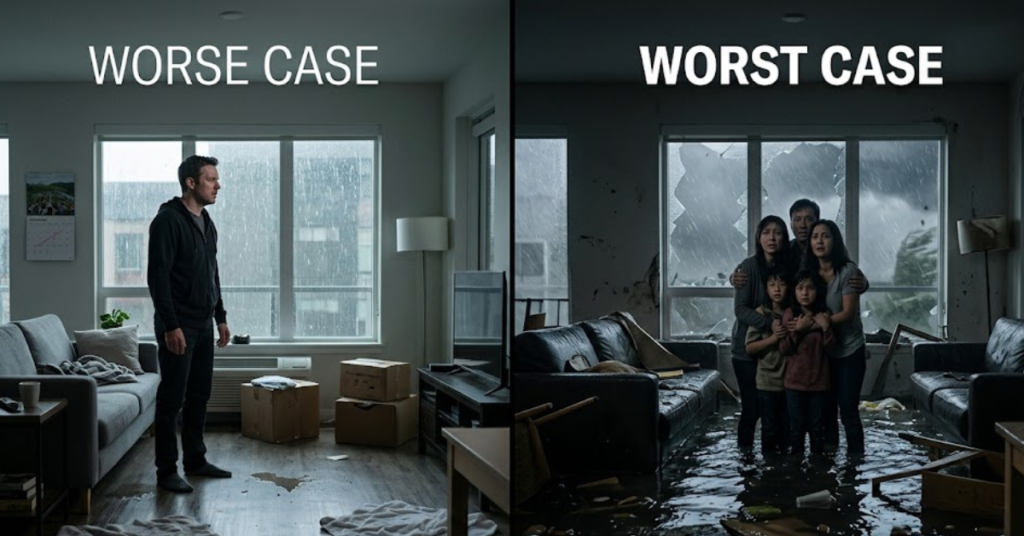

If you’ve ever typed worse case or worst case and hesitated, you’re not alone. This is one of the most common English mistakes because the two words look similar, but only one is correct in standard usage.
The simple answer is: “worst case” is correct, not “worse case.”
Let’s break it down in a clear and practical way so you always use it correctly.
Is It Worse Case or Worst Case?
If you’re asking is it worse case or worst case?, here’s the rule:
- Worst case → correct
- Worse case → incorrect in this expression
Why?
Because “worst” is a superlative adjective (the most extreme form), and we use it when talking about the most extreme possible situation.
So when comparing worse case or worst case, only “worst case” is grammatically correct.
Worst Case Meaning
To understand worst case or worst case scenario, we need to know what “worst case” actually means.
Definition:
“Worst case” refers to:
- The most serious or unfavorable possible outcome
- The extreme negative situation in a situation analysis
- The maximum level of difficulty that could happen
Example:
- In the worst case, the project may be delayed.
- We prepared for the worst-case scenario.
Worst Case Scenario Meaning
The phrase worst case scenario is very commonly used in English.
Meaning:
It describes:
- The most negative possible situation
- A planning assumption for failure or maximum risk
Examples:
- In the worst-case scenario, we may lose funding.
- Let’s prepare for the worst-case scenario.
So when people ask is it worse case or worst case scenario, the correct form is always worst case scenario.
Why “Worse Case” Is Incorrect
The word “worse” is a comparative adjective.
“Worse” means:
- More bad than something else
Example:
- This situation is worse than yesterday’s.
But in “worst case”, we are not comparing two situations—we are talking about the extreme limit.
That’s why:
- worse case (incorrect)
- worst case (correct)
Worst Case Grammar Rule
To understand worse case or worst case grammar, here’s the simple rule:
- Use “worst” when talking about the most extreme situation
- Use “worse” only when comparing two things
Quick comparison:
- This is worse than before (comparison)
- This is the worst case (extreme outcome)
Worst Case or Worst Case Sentences
Here are correct examples using worst case or worst case scenario:
Correct sentences:
- In the worst case, we will reschedule the meeting.
- We should prepare for the worst-case scenario.
- Even in the worst case, the system should survive.
- Let’s consider the worst-case outcome before deciding.
Incorrect sentences:
- In the worse case, we will reschedule.
- We are planning for a worse case scenario.
Do You Say Worse Case or Worst Case?
If you’re wondering do you say worse case or worst case, the answer is simple:
- Always say worst case in formal and informal English
It is the standard expression used in:
- Business English
- Academic writing
- Everyday conversation
- Risk planning
Easy Way to Remember the Difference
Here’s a simple trick:
- Worse = comparison (two things)
- Worst = extreme (one thing at the limit)
Memory shortcut:
If it’s the final and most serious outcome, use worst case.
Common Usage in Real Life
Business:
- Worst-case budget planning
- Worst-case risk analysis
Technology:
- Worst-case system failure
- Worst-case performance delay
Everyday life:
- Worst-case, I’ll take a taxi.
- Worst-case scenario, we’ll try again tomorrow.
FAQs
Is it worse case or worst case?
The correct phrase is worst case. “Worse case” is incorrect in this context.
What is worst case scenario meaning?
It means the most serious or unfavorable possible outcome in a situation.
Why is worse case wrong?
Because “worse” is comparative, while “worst” is used for extremes.
What is worse case or worst case grammar rule?
Use “worst” for superlative (most extreme) situations and “worse” for comparisons.
Can I say worse case scenario?
No, the correct form is worst-case scenario.
What is an example of worst case?
“In the worst case, the project will be delayed by one month.”
Conclusion
The confusion between worse case or worst case is very common, but the rule is simple: only “worst case” is correct in English. The word “worse” is used for comparisons, while “worst” is used for extreme outcomes.
Once you remember this difference, you can confidently use “worst case” in both writing and conversation without hesitation.