

English can be surprisingly tricky, especially when words sound exactly alike but mean completely different things. One of the most commonly confused word pairs is pair vs pare. These words are homophones, meaning they share the same pronunciation even though their meanings and spellings are different.
The confusion grows even more when another similar-sounding word enters the mix: pear. Understanding pair vs pare vs pear is important for writing clearly and avoiding embarrassing spelling mistakes in school, work, or everyday communication.
This guide explains the meanings, pronunciation, grammar, and real-world examples of these commonly mixed-up words in a simple and practical way.
What Is the Difference Between Pair vs Pare?
The biggest difference lies in what the words actually mean.
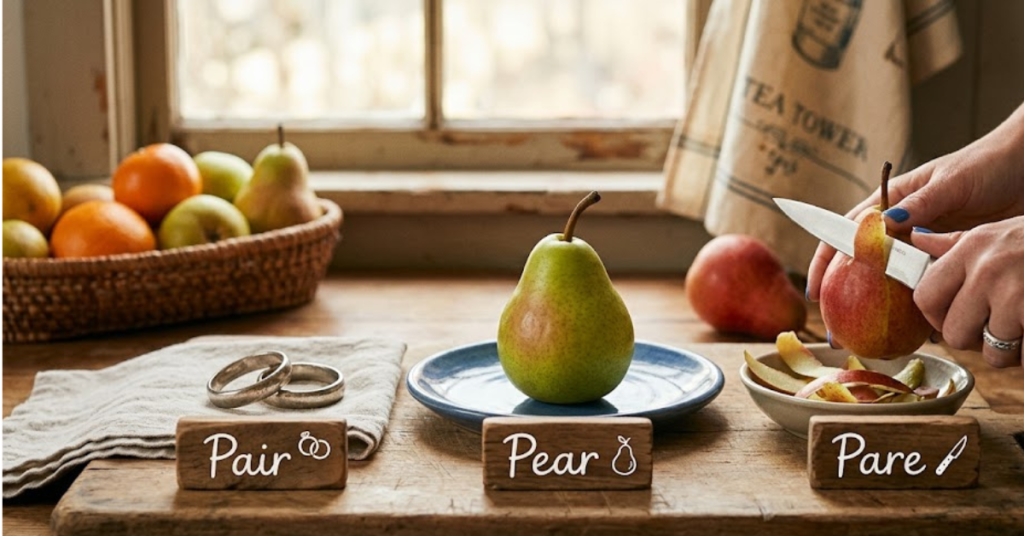
- Pair refers to two matching or connected things.
- Pare means to trim, cut away, or reduce something.
Although they sound identical, they are used in completely different contexts.
Pair Meaning and Examples
The word “pair” usually refers to two items that belong together or function as a set.
Common Uses of Pair
Examples include:
- A pair of shoes
- A pair of gloves
- A pair of earrings
It can also refer to two people working together.
Example:
- The tennis pair won the championship.
Pair as a Verb
Sometimes “pair” means matching or connecting things together.
Examples:
- Pair the sauce with grilled chicken.
- The teacher paired students for the activity.
Pare Meaning and Examples
The word “pare” is less common in everyday conversation, but it is still important.
Pare Means to Trim or Peel
This word usually appears in cooking or discussions about reducing something gradually.
Examples:
- Pare the apple before baking it.
- She pared the edges carefully.
Pare Down Meaning
A common phrase is “pare down,” which means reducing something little by little.
Examples:
- The company pared down expenses.
- He tried to pare down his schedule.
Pair vs Pare Pronunciation
One reason people confuse these words is that they are pronounced exactly the same.
Both words sound like:
- /per/
Because they sound identical, readers rely on spelling and sentence context to understand meaning.
This is a classic example of English homophones.
Understanding Pair vs Pare vs Pear
Things become even more confusing when “pear” joins the conversation.
Pear Meaning
A pear is a sweet fruit with a rounded bottom and narrow top.
Examples:
- She sliced a ripe pear.
- Pear trees grow well in cool climates.
So while these three words sound identical, their meanings are completely unrelated.
Quick Comparison
- Pair = two matching things
- Pare = trim or reduce
- Pear = fruit
Why People Confuse These Words
English spelling can be difficult because pronunciation often doesn’t match meaning.
Homophones Cause Confusion
Words that sound the same are easy to mix up when writing quickly.
Autocorrect Errors
Phones and computers sometimes replace words automatically, especially if context is unclear.
English Learning Challenges
For non-native speakers, homophones are particularly confusing because listening alone cannot reveal the correct spelling.
Easy Memory Tricks
Simple associations can help you remember the correct word instantly.
Remember “Pair” With Two
Think of:
- A pair of socks
- A pair of twins
- A pair of headphones
The word pair almost always involves two connected items.
Remember “Pare” With Cutting
The word pare relates to trimming or peeling.
Think:
- Pare potatoes
- Pare fruit
- Pare down expenses
Remember “Pear” as Fruit
Picture the green fruit you eat.
That mental image makes the word easy to recognize.
Common Sentences Using Pair and Pare
Seeing the words in real examples helps reinforce their meanings.
Pair
- I bought a new pair of boots.
- The dancers performed as a pair.
- Pair the wine with seafood.
Pare
- Pare the carrots before cooking.
- The editor pared the article down.
- He tried to pare unnecessary costs.
Pear
- She packed a pear in her lunch.
- The pear was sweet and juicy.
Pair vs Pare in Writing
Correct spelling matters because using the wrong word changes the sentence meaning entirely.
For example:
- “Please pare the socks together” sounds incorrect.
- “I bought a pair to eat” changes the meaning completely.
Careful proofreading can prevent these mistakes.
Other Common English Homophones
Pair, pare, and pear belong to a larger group of confusing English homophones.
Examples include:
- Right and write
- Sea and see
- Flour and flower
- Mail and male
Learning these pairs improves spelling, reading comprehension, and communication skills.
Why Context Is So Important
Since pronunciation cannot distinguish homophones, context becomes the key to understanding them.
For example:
- “I need a pair of gloves” clearly refers to two items.
- “Please pare the apple” clearly refers to cutting or peeling.
The surrounding words tell readers which spelling is correct.
FAQs
What is the difference between pair vs pare?
Pair refers to two connected items, while pare means to trim, peel, or reduce something.
Are pair and pare pronounced the same?
Yes. They are homophones and share the same pronunciation.
What does pear mean?
Pear refers to a fruit that is usually sweet and shaped with a narrow top and rounded bottom.
What does “pare down” mean?
Pare down means to reduce something gradually, such as expenses, words, or responsibilities.
How can I remember pair vs pare vs pear?
Think:
- Pair = two items
- Pare = cut or trim
- Pear = fruit
Is pair a noun or a verb?
It can be both. Pair can describe two matching items or the action of matching things together.
Conclusion
Understanding pair vs pare becomes much easier once you focus on the meaning behind each word instead of just the pronunciation. While they sound exactly alike, their uses are completely different in writing and conversation.
Adding pear into the mix can make things even more confusing, but simple memory tricks and context clues help separate them quickly. The more you read and write these words correctly, the more natural they become.
Mastering small language details like these can improve your confidence, strengthen your communication skills, and make your writing more polished and professional.