
It’s one of those small spelling questions that can quietly trip you up: disregulated or dysregulated—which one is actually correct? Whether you’re writing about mental health, biology, or everyday emotional balance, using the right term matters more than you might think.
The short answer is simple, but the reasoning behind it is worth understanding. In this guide, we’ll break down the difference, explain why confusion happens, and show you how to use the correct term with confidence.
What Does Dysregulated Mean?
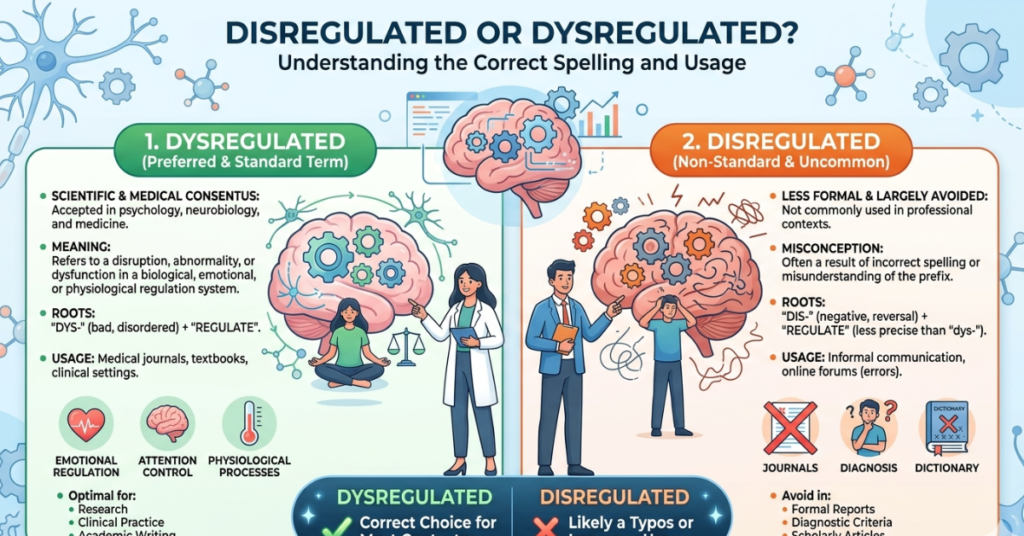
Dysregulated is the correct and widely accepted term. It refers to something that is not properly controlled or balanced.
Common contexts include:
- Emotional dysregulation (difficulty managing emotions)
- Biological dysregulation (imbalance in bodily systems)
- Behavioral dysregulation (trouble controlling actions or impulses)
Simple example:
A person experiencing intense mood swings might be described as emotionally dysregulated.
In short, the term points to a system—mental, physical, or behavioral—that isn’t functioning as it should.
Is “Disregulated” a Real Word?
Here’s where things get tricky. If you’ve ever wondered, is it disregulated or dysregulated, you’re not alone.
Disregulated is generally considered incorrect or, at best, a non-standard variation. It doesn’t appear in most authoritative dictionaries or medical references.
Why it shows up anyway:
- People assume “dis-” works the same way as in words like disorganized
- It sounds natural in everyday English
- It’s often used by mistake in informal writing
Despite this, professionals and style guides consistently favor dysregulated.
Disregulated or Dysregulated UK: Does It Change?
If you’re writing for a British audience, you might wonder whether disregulated or dysregulated UK usage differs.
The answer: it doesn’t.
Key point:
- Dysregulated is correct in both UK and US English
Unlike spelling differences such as color vs colour, this term remains consistent across regions.
Why “Dys-” Is the Right Prefix
Understanding the prefix helps clear up the confusion.
The prefix “dys-” means:
- Abnormal
- Impaired
- Difficult
It comes from Greek and is commonly used in medical and psychological terminology.
Examples:
- Dysfunction (impaired function)
- Dyslexia (difficulty with reading)
- Dysregulation (impaired regulation)
On the other hand, “dis-” usually means:
- Not
- Opposite of
- Removal of
That subtle difference is why dysregulated is the accurate choice when describing imbalance or impairment.
When and How to Use Dysregulated Correctly
To sound clear and credible, it helps to use the term in the right context.
Use “dysregulated” when describing:
- Emotional instability
- Hormonal or nervous system imbalance
- Difficulty maintaining normal function
Example sentences:
- “Chronic stress can lead to a dysregulated nervous system.”
- “Children may appear dysregulated when overwhelmed.”
Quick tips:
- Stick with dysregulated in professional or academic writing
- Avoid “disregulated” unless quoting informal speech
- Double-check spelling in sensitive topics like mental health
Common Mistakes to Avoid
Even confident writers slip up here. Watch out for these:
- Writing disregulated instead of dysregulated
- Assuming both spellings are interchangeable
- Ignoring the medical context of the word
A small spelling mistake can affect credibility, especially in health-related content.
FAQs
1. Is it disregulated or dysregulated?
The correct spelling is dysregulated. “Disregulated” is not considered standard.
2. What does dysregulated mean?
It describes something that is not functioning properly or is out of balance, often used in medical or psychological contexts.
3. Is “disregulated” ever correct?
It’s occasionally used informally, but it’s not accepted in professional or academic writing.
4. Does UK English use a different spelling?
No. The term remains dysregulated in both UK and US English.
5. Why do people confuse the two?
Because “dis-” is a more familiar prefix, many assume it applies here—but “dys-” is the accurate one.
Conclusion
When it comes to disregulated or dysregulated, the distinction is clear once you understand the roots of the word. While “disregulated” might seem logical, it doesn’t hold up in formal usage. Dysregulated is the correct, widely accepted term across both medical and everyday contexts.
If you want your writing to sound polished and trustworthy, this is an easy win—just stick with the right spelling. And if you’re exploring more language nuances, keep going—these small details can make a big difference in how your message is received.