
English can be tricky, especially when words sound similar but mean completely different things. One of the most common examples is buy vs by, a pair that often confuses learners, writers, and even native speakers. At first glance, they look almost identical, but their meanings and usage are entirely different. In some cases, people also get confused with buy vs by vs bye, which makes the mix-up even more interesting.
In this guide, we’ll break down buy vs by in a simple, conversational way so you can finally use them correctly without second-guessing yourself.
Buy vs By Meaning Explained
To understand buy vs by meaning, it’s important to look at each word separately. Although they differ by just one letter, their roles in sentences are completely unrelated.
What Does “Buy” Mean?
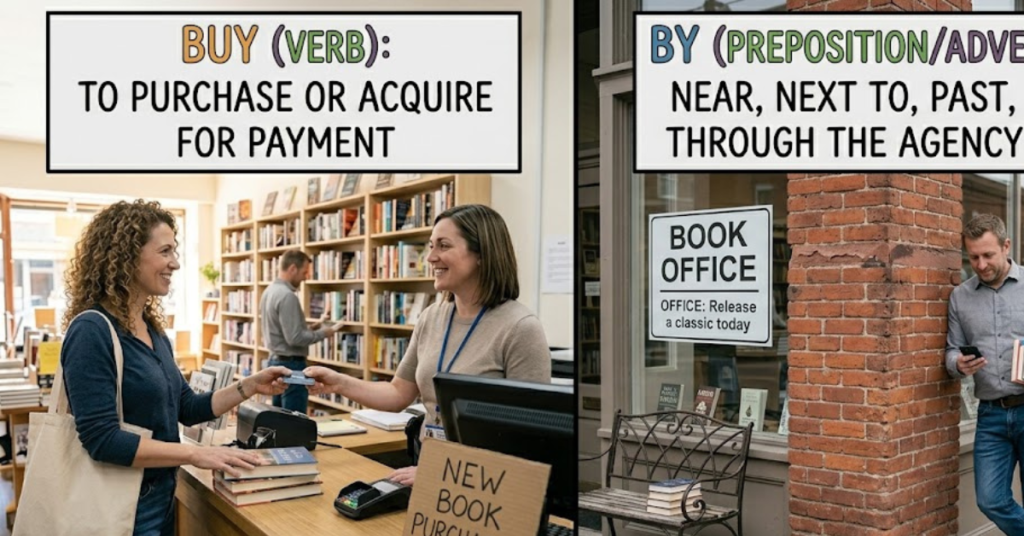
“Buy” is a verb that means to purchase something in exchange for money or value. It is one of the most commonly used action words in English.
Examples:
- I want to buy a new phone.
- She will buy groceries after work.
- They bought tickets online.
So, “buy” always relates to transactions or purchasing.
What Does “By” Mean?
“By” is a preposition with several uses, and this is where confusion in buy vs by meaning usually begins. It can indicate:
- Location: The house is by the river
- Method: Send it by email
- Time: Finish it by Monday
- Agent (passive voice): The book was written by her
Unlike “buy,” it does not involve purchasing anything.
Buy vs By in Real-Life Usage
Understanding buy vs by becomes easier when you see them in real sentences.
- I need to buy a laptop before college starts.
- We passed by the old school yesterday.
- She decided to buy fresh fruits from the market.
- The message was sent by courier.
Even though they may sound similar in conversation, their meanings are completely different.
Buy vs By vs Bye Confusion Explained
Another common confusion comes from buy vs by vs bye. These three words sound alike in spoken English but serve very different purposes.
- Buy: to purchase something
- By: a preposition showing method, location, or time
- Bye: a short form of goodbye used when leaving
Examples:
- I want to buy a gift for her.
- We sat by the window.
- Bye, see you tomorrow!
This trio is a classic example of English homophones that often confuse learners.
Simple Tricks to Remember Buy vs By
If you often mix them up, here are some easy memory tips:
- “Buy” has a “u” like “purchase you make”
- “By” is short and works like a connector word in sentences
- Think: buy = action, by = position or method
These small associations can make a big difference in avoiding mistakes.
Common Grammar Mistakes with Buy vs By
Even advanced learners sometimes slip up with buy vs by. Here are common errors:
- Incorrect: I will by a phone
- Correct: I will buy a phone
- Incorrect: She buy the gift by herself
- Correct: She bought the gift by herself
Paying attention to context is the key to mastering buy vs by usage.
Why Buy vs By Causes Confusion
There are a few reasons why buy vs by is confusing:
- They are homophones in many accents
- They differ by only one letter
- They appear frequently in everyday writing
- English spelling is not always phonetic
This is why learners often need repeated exposure to understand them properly.
FAQs on Buy vs By
1. What is the main difference in buy or by meaning?
“Buy” means to purchase something, while “by” is a preposition used for time, method, or location.
2. How do I remember buy or by easily?
Think of “buy” as an action word involving money, and “by” as a connector word showing relation or position.
3. Is buy or by or bye related?
They are not related in meaning, but they are often confused because they sound similar in speech.
4. Can you give simple examples of buy vs by?
Yes:
- I will buy a book
- She sat by the door
5. Why do people confuse buy or by or bye so often?
Because they are homophones and sound almost identical when spoken quickly.
Conclusion
Understanding buy vs by is all about recognizing their roles in a sentence. While “buy” always refers to purchasing, “by” works as a preposition showing method, time, or location. When you also consider buy vs by vs bye, it becomes clear why these words confuse so many learners.
The good news is that with practice and real-life examples, mastering buy vs by becomes much easier. Keep noticing how they appear in daily reading and writing, and soon you’ll use them without hesitation.