
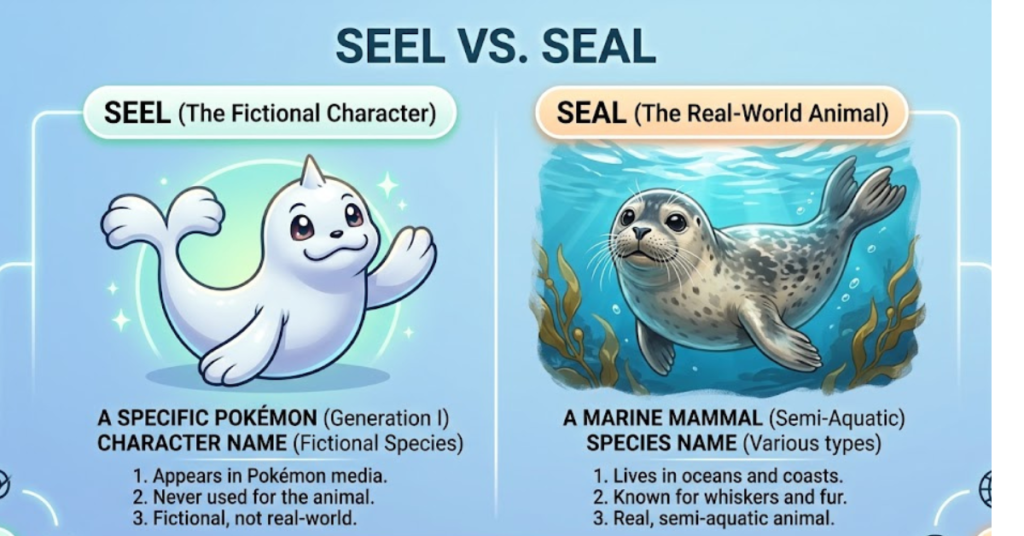

English can be confusing, especially when two words sound similar or appear almost identical in spelling. One example that often causes uncertainty is seel vs seal. While many people assume they are interchangeable, the two words actually have very different meanings and levels of usage in modern English.
In everyday writing, “seal” is the far more common word, while “seel” is rare and mostly found in historical or specialized contexts. Understanding the difference can help improve your vocabulary, spelling accuracy, and overall writing confidence. This guide explains the meanings, usage examples, origins, and key distinctions between these commonly confused words.
What Does “Seal” Mean?
“Seal” is a common English word with several meanings depending on context.
Seal as a Verb
As a verb, “seal” usually means:
- To close tightly
- To secure something completely
- To finalize or confirm
Examples
- Please seal the envelope before mailing it.
- The company sealed the agreement yesterday.
- Make sure the container is sealed properly.
Seal as a Noun
As a noun, “seal” can refer to:
- A stamp or official mark
- A waterproof closure
- A marine mammal
Examples include:
- The royal seal on a document
- A rubber seal around a window
- A seal swimming in the ocean
Because of its versatility, “seal” appears frequently in daily communication.
What Does “Seel” Mean?
“Seel” is a much less common word in modern English.
Traditionally, “seel” means:
- To close or sew shut the eyes of a bird, especially in falconry
Historically, the term appeared in older literature and hunting-related contexts.
Example of “Seel”
- The falconer attempted to seel the bird temporarily.
Today, most English speakers rarely encounter this word outside of historical writing or specialized discussions.
Seel vs Seal Meaning Explained
Understanding seel vs seal meaning becomes much easier once you realize the words belong to completely different usage categories.
“Seal”
- Common modern English word
- Used in business, packaging, law, construction, and nature
“Seel”
- Rare historical word
- Mostly connected to falconry or literary references
Although they sound somewhat alike, their meanings are unrelated in modern usage.
Seel vs Seal Difference in Everyday English
The biggest difference is frequency and practicality.
Seal
You’ll see “seal” everywhere:
- Legal documents
- Food packaging
- Home repairs
- Animal references
- Official approvals
Seel
You’ll rarely encounter “seel” unless:
- Reading historical texts
- Studying falconry
- Exploring old literature
In most modern situations, “seal” is the correct word people intend to use.
Why People Confuse “Seel” and “Seal”
The confusion usually happens because:
- The words sound somewhat similar
- English spelling can be unpredictable
- Typing errors are common
- Autocorrect may not catch rare mistakes
Some people also accidentally write “seel” when they actually mean “seal.”
Common Uses of “Seal”
Because “seal” has several meanings, it appears in many industries and situations.
Business and Legal Contexts
- Sealing contracts
- Official seals
- Finalizing agreements
Packaging and Storage
- Vacuum-sealed food
- Sealed containers
- Airtight packaging
Construction and Repairs
- Sealing cracks
- Waterproof sealing
- Window seals
Nature and Wildlife
- Harbor seals
- Arctic seals
- Marine mammal studies
This versatility makes “seal” an extremely common English word.
Historical Origins of “Seel”
The word “seel” comes from older forms of English and was mainly associated with falconry practices.
Historically, falconers sometimes partially closed a bird’s eyelids temporarily to calm or train it. That process was referred to as “seeling.”
Over time, the word became outdated and fell out of regular usage.
Is “Seel” Still Used Today?
Technically, yes, but very rarely.
You may still encounter “seel” in:
- Historical novels
- Academic discussions
- Falconry references
- Shakespearean or classical literature
For everyday writing, however, most people never need to use the word.
Examples of Correct Usage
Seeing the words in sentences helps clarify the distinction.
Correct Uses of “Seal”
- Seal the package carefully.
- The deal was officially sealed yesterday.
- The seal rested on the ice.
Correct Use of “Seel”
- Ancient falconers sometimes seel trained birds.
The contrast becomes obvious once you see the contexts side by side.
Common Mistakes to Avoid
Because “seal” is so much more common, mistakes usually happen when someone accidentally types “seel.”
Incorrect
- Please seel the envelope.
- The container must be seel tight.
Correct
- Please seal the envelope.
- The container must be sealed tightly.
Proofreading helps catch these small but important spelling issues.
Synonyms for “Seal”
Depending on context, several synonyms may replace “seal.”
Verb Synonyms
- Close
- Secure
- Fasten
- Lock
- Finalize
Noun Synonyms
- Stamp
- Emblem
- Closure
- Insignia
The correct synonym depends on how the word is being used.
Why Correct Word Choice Matters
Even small spelling differences can affect clarity and professionalism.
Using the correct word helps:
- Improve communication
- Avoid confusion
- Strengthen credibility
- Create polished writing
This becomes especially important in legal, academic, or professional settings.
FAQs
What is the difference between seel and seal?
“Seal” is a common modern English word, while “seel” is a rare historical term related to falconry.
Is seel a real word?
Yes. “Seel” is an actual English word, though it is rarely used today.
Which word should I use in normal writing?
In almost all modern situations, “seal” is the correct choice.
What does seal mean?
“Seal” can mean to close tightly, confirm officially, or refer to a marine animal.
Why do people confuse seel and seal?
The confusion usually comes from similar pronunciation and spelling.
Is seel used in modern English?
Only occasionally in historical, literary, or specialized contexts.
Conclusion
Understanding the difference between seel vs seal is mainly about recognizing how commonly each word is used in modern English. “Seal” is a widely used word with several meanings related to closing, securing, confirming, or even describing a marine animal. “Seel,” on the other hand, is an old and highly specialized term rarely seen outside historical or literary contexts.
For most writers, “seal” will almost always be the correct choice. Learning these subtle distinctions not only improves spelling accuracy but also strengthens your overall communication skills. Small vocabulary details like this can make your writing appear clearer, sharper, and more professional.