
Some spelling mistakes happen because words sound similar when spoken quickly, while others appear because of simple typing errors. One common confusion people search for is trama vs trauma. Although the two words look closely related, only one is considered a standard English word in most situations.
The word “trauma” is widely used in medicine, psychology, and everyday conversation to describe emotional or physical distress. “Trama,” on the other hand, has a very different meaning in specialized contexts and is often mistakenly used instead of “trauma.” This article breaks down the difference clearly so you can understand the correct spelling, meanings, and proper usage.
What Does “Trauma” Mean?
“Trauma” is the correct and commonly used English word.
It refers to:
- Emotional distress
- Psychological shock
- Physical injury
- Deep mental impact caused by difficult experiences
The term is commonly used in healthcare, therapy, and daily conversation.
Examples of Trauma
- Emotional trauma after a stressful event
- Childhood trauma
- Physical trauma from an accident
- Psychological trauma following a disaster
The word can describe both mental and physical suffering depending on context.
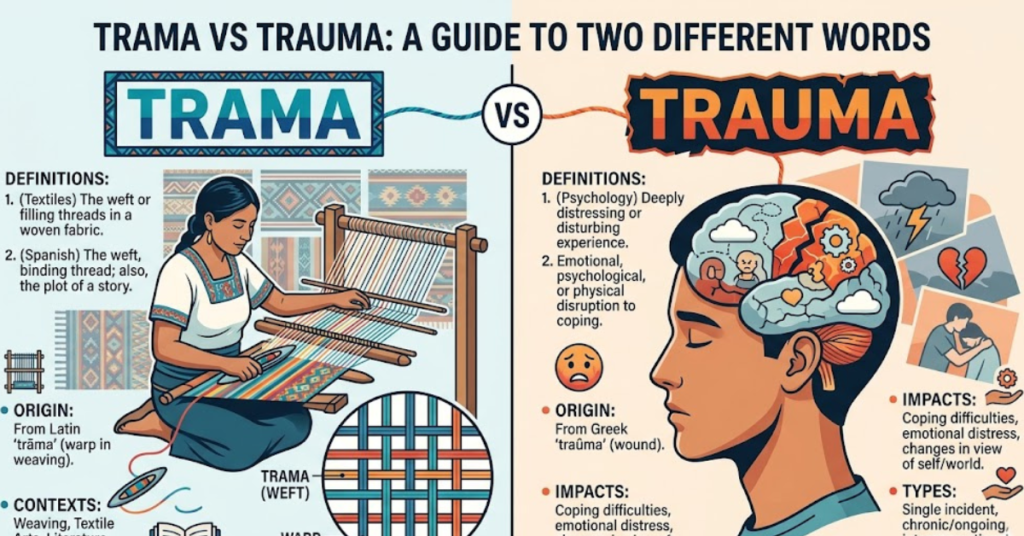
What Does “Trama” Mean?
“Trama” is a real word in some specialized or foreign-language contexts, but it is not the standard English replacement for “trauma.”
In certain fields, “trama” may refer to:
- A woven structure or framework
- Textile patterns
- Plot structure in some Romance languages
For example:
- In Spanish or Italian, “trama” can mean “plot” or “storyline.”
However, in English conversations about emotional or medical suffering, “trama” is usually considered a misspelling of “trauma.”
Trama vs Trauma Explained Clearly
Understanding trama vs trauma becomes much easier once you recognize that the words belong to different language contexts.
Trauma
- Correct English word
- Related to injury, distress, or emotional pain
- Used in medicine and psychology
Trama
- Rare in English
- Exists in specialized or foreign-language usage
- Often a spelling mistake when people mean “trauma”
In everyday English, “trauma” is almost always the intended word.
Why People Misspell “Trauma” as “Trama”
There are several reasons this spelling mistake happens frequently.
Fast Typing
People may accidentally skip the “u” while typing quickly.
Pronunciation Confusion
In casual speech, the middle vowel sound may become less noticeable.
Autocorrect and Informal Writing
Social media and texting encourage shortened or rushed spelling habits.
Language Influence
Speakers of languages where “trama” is an actual word may accidentally transfer that spelling into English.
Different Types of Trauma
The word “trauma” can apply to many situations.
Emotional Trauma
This involves psychological distress caused by experiences such as:
- Loss
- Abuse
- Violence
- Major life changes
Physical Trauma
Medical professionals use the term for bodily injuries caused by:
- Accidents
- Falls
- Sports injuries
- Surgery
Childhood Trauma
This refers to distressing experiences during childhood that may affect long-term emotional health.
Collective Trauma
Communities or groups can experience trauma after disasters, wars, or large-scale tragedies.
Trauma in Psychology and Mental Health
In psychology, trauma describes experiences that overwhelm a person’s ability to cope emotionally.
Common symptoms may include:
- Anxiety
- Fear
- Flashbacks
- Emotional numbness
- Sleep problems
Mental health professionals often help individuals process trauma through therapy and support systems.
Trauma in Medical Settings
Doctors and emergency teams frequently use the term in physical health care.
Examples Include
- Head trauma
- Chest trauma
- Blunt force trauma
- Surgical trauma
In medicine, trauma usually refers to serious physical injury requiring immediate treatment.
Is “Trama” Ever Correct in English?
Yes, but only in limited situations.
Examples of Legitimate “Trama” Usage
- Literary analysis involving foreign-language texts
- Textile terminology
- Artistic or narrative discussions in Spanish or Italian contexts
Outside of those specialized uses, “trauma” is almost always the correct word in English.
Common Examples of Correct Usage
Seeing the words in context helps reinforce proper spelling.
Correct
- She experienced emotional trauma after the accident.
- The hospital specializes in trauma care.
- Childhood trauma can affect adult relationships.
Usually Incorrect in English
- She experienced emotional trama.
- The patient suffered severe trama.
In these cases, “trauma” is the correct spelling.
Why Correct Spelling Matters
Spelling accuracy becomes especially important with medical and psychological terms.
Using the correct spelling helps:
- Improve clarity
- Prevent misunderstandings
- Maintain professionalism
- Build trust with readers
This matters in healthcare, education, business writing, and online communication.
Synonyms for “Trauma”
Depending on context, several related words may work as alternatives.
Emotional Context
- Distress
- Shock
- Emotional pain
- Psychological injury
Physical Context
- Injury
- Wound
- Damage
- Bodily harm
The right synonym depends on the situation.
How to Remember the Correct Spelling
Simple memory tricks can make “trauma” easier to spell correctly.
Remember the “U”
The word contains:
- Trau-ma
Thinking of “cause” or “pause” may help you remember the vowel combination.
Read It in Parts
Breaking the word into syllables often improves spelling accuracy:
- Trau / ma
FAQs
Which is correct: trama or trauma?
“Trauma” is the correct English word in medical and emotional contexts.
Is trama a real word?
Yes, but mainly in specialized or foreign-language usage, not as a replacement for “trauma.”
What does trauma mean?
Trauma refers to emotional distress, psychological shock, or physical injury.
Why do people spell trauma as trama?
The mistake usually happens because of fast typing, pronunciation confusion, or missing the “u.”
Can trauma be emotional and physical?
Yes. Trauma may describe both emotional suffering and bodily injury.
Is trama used in psychology?
No. Psychology and mental health professionals use the word “trauma.”
Conclusion
Understanding the difference between trama vs trauma is important because the two words carry very different meanings in English. “Trauma” is the correct term used in psychology, medicine, and everyday communication to describe emotional distress or physical injury. “Trama,” meanwhile, belongs mostly to specialized or foreign-language contexts and is often simply a spelling mistake.
Because “trauma” is such an important medical and emotional term, using the correct spelling helps ensure clear communication and professionalism. Small spelling details may seem minor, but they can significantly affect how your writing is understood.
By learning the distinction and understanding the origins of both words, you can avoid a very common mistake and communicate with greater accuracy and confidence.